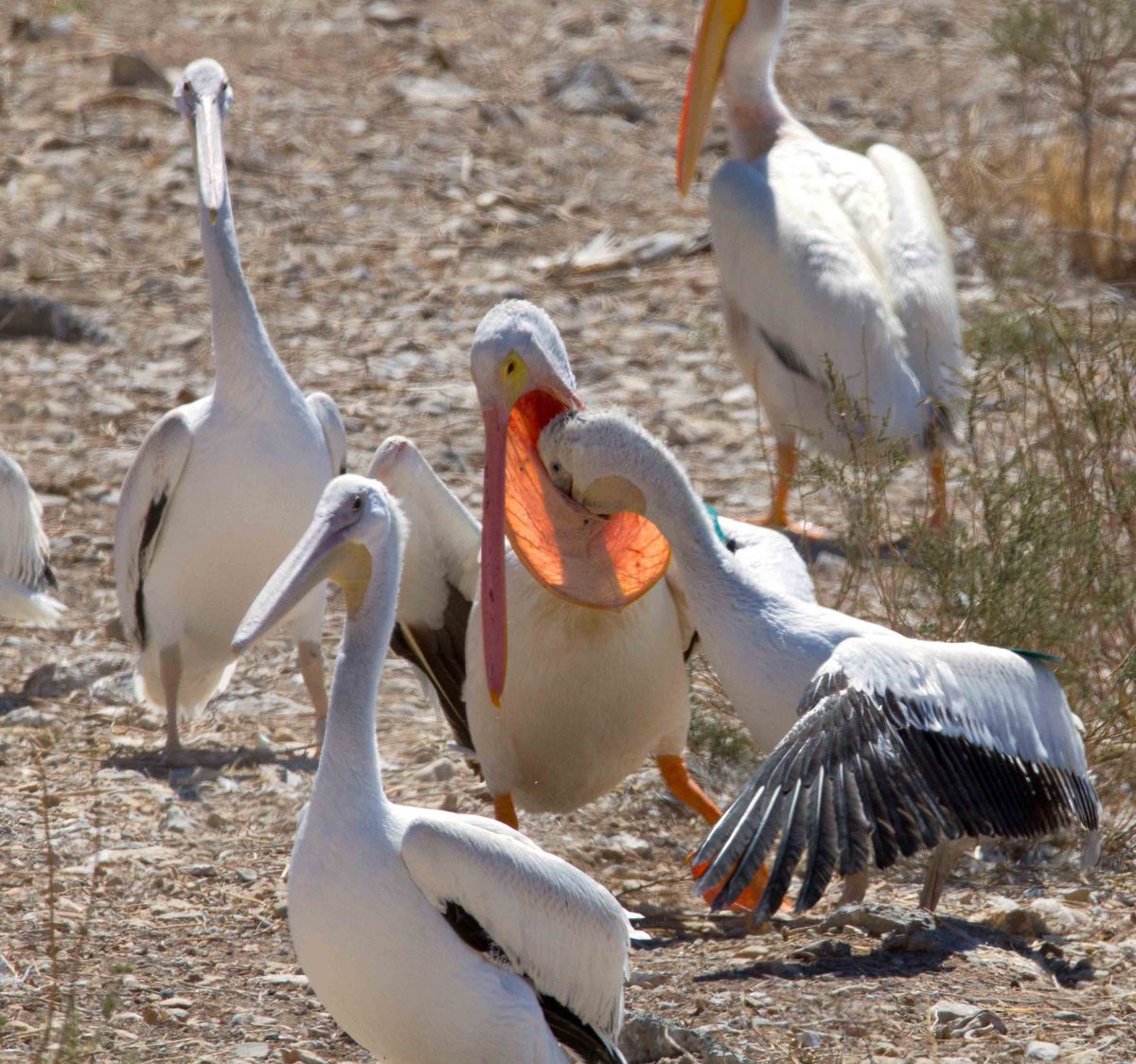
Whats For Lunch Mom....
by Robbie Knight
This is one of the more difficult shots I have attempted and here is why….
White pelicans are colonial nesting birds which means they congregate in large numbers and within close proximity lay eggs over relatively short periods of time; often these locations are remote, lack predators, and by design difficult to access. This group nests on a remote island in the middle of the Great Salt Lake, Northern Utah. Due to the extremely high water – salt content (100% saturated) and limited access this is a very difficult location to photograph.
Even once you are on-island the separate egg laying and rearing / brooding areas are at the base of rocky & steep cliffs. Once on a brood site the adults are very flighty and flush readily. I obtained proximity on this trip by staying on a steep hillside in the rocks and used a blind to access the chicks (yes - I hiked very slowly for more that a 1/2 mile while inside the blind climbing over rocks – a story for another day )….. Once on the rearing site I was able to get close enough to capture what I had set out to document; feeding time. Overall start to finish the shots I obtained took about 12 hours to create and now I look back I spent most of a full day observing the colony as adults returned with food, chicks interacted with each other, and I even managed to capture the elusive adult/chick food exchange several times. This is neat as the adults from this group feed twice daily and bring a belly full of fish back to a youngster. The awesome part is that not just any youngster. The adult will fly-over a group of 300+ youngsters, and find an individual chick. What I have seen is that the chick approaches and vocalizes (recognition behavior?), then stimulates the mouth of the adult (its natal mother if everything lines up). Once inside the mouth of the adult the chick will put most of their front half into the adult and gorge on the shad the adult has brought back. This lasts for several minutes and then the adult shakes loose of the chick and departs.
The temperature on the island was ~98, and the brine and biting invertebrates were ruthless. Feeding time is mid-afternoon and with white subjects, reflective sand, and clear blue skies -- shooting conditions were not favorable.
This was an awesome day and one I will not soon forget. To interact with nature and safely document natural behavior/response has been a life – long pursuit and this was an awesome experience.
Robbie
You will see in the larger version some BG distortion. I believe this is actually heat parallax - anyone have experience or suggestions for dealing with the effect (pre or post)?
1DM4, 840mm, f11, 1.4x, 1/1600th, ISO800

Comments
4 commentsSounds like you had a memorable time, I thoroughly enjoyed your narrative Robbie