
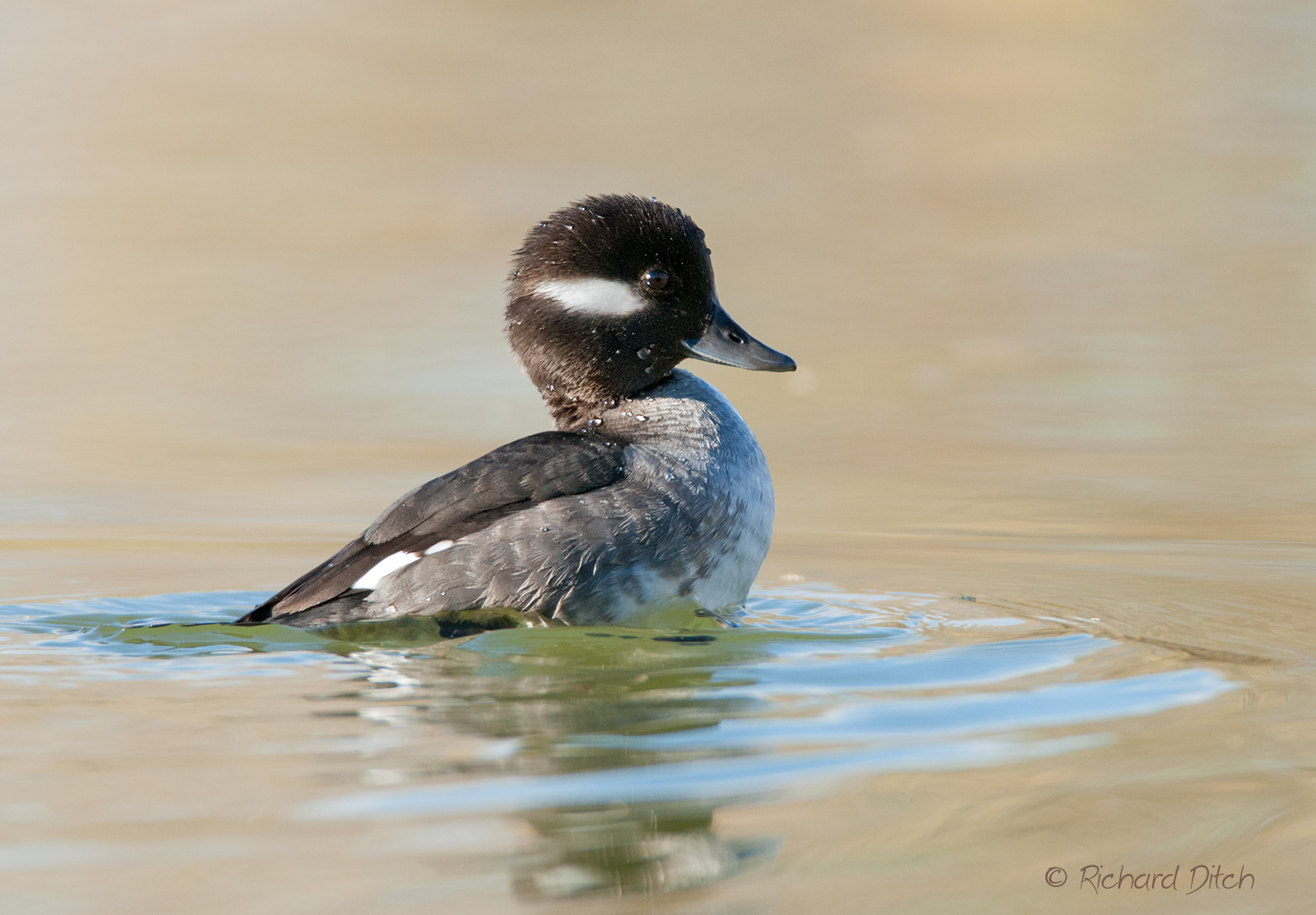
Bufflehead (Bucephala albeola)
Gilbert Water Ranch, AZ
Date: January 3, 2011, 3:21 pm
Equipment: Nikon D200, AF-S Nikkor 300 f/2.8 D ED-IF plus TC20E (2x), Gitzo 1325 tripod, RRS BH-55, Sidekick
Exposure: ISO 400, Aperture priority matrix metered, 1/500th @ f/6.3, -2/3rd ec
Raw, PS CC 2017 on Mac, cropped to 74% of full frame
Edit: corrected species name - Thanks for catcghing this Jerry!
More from the back catalog. Normally I cannot get close enough to this small species for decent photos, but this individual was unusually cooperative.
There's a potential issue with this that bothers a non photographer friend. I haven't mentioned it to avoid influencing any comments in advance. But I'm interested to see if anyone else notices and reacts to the issue.
Honest critiques requested; all comments appreciated. If possible please view the large version before commenting.
Comments
12 commentsThanks Jerry. Indeed, it is. I don't know what I was thinking earlier when I posted it! The jpeg is named correctly, so obviously I wasn't thinking at all.
Note this is cropped to 74% of the original. So, not cropping would restore some space around the duck. I love showing birds in habitat, but I've never sure how much empty water looks right around a subject like this.
- Hans
My memory was that it was starting a dive, but looking at the raw files from this encounter implies it had just surfaced. The posted image is #031, and the sequence terminates in a vigorous head shake.
Checking the time stamp on each image shows that these eight frames occurred over 22 seconds, with the final six shots covering 1.35 seconds. The dive lasted about 20 seconds.
The issue raised by my non photographer birding friend was the color on the Bufflehead:
I was quite surprised by this, pointing out that any color cast was simply skylight reflected off the water onto the bird's breast. But I made another version as seen here with the blue cast removed from the breast. My lesson from this was that non photographers don't "see the light" in the same way photographers do.