Nature Photographers Network
This is the preserved archive of the original Nature Photographers Network. The community continues at naturephotographers.network.
Monsoon Green
‹ PreviousLandscape GalleryNext ›

Monsoon Green

by Alberto Patiño

Gallery: LandscapePosted July 3, 201776 views8 comments
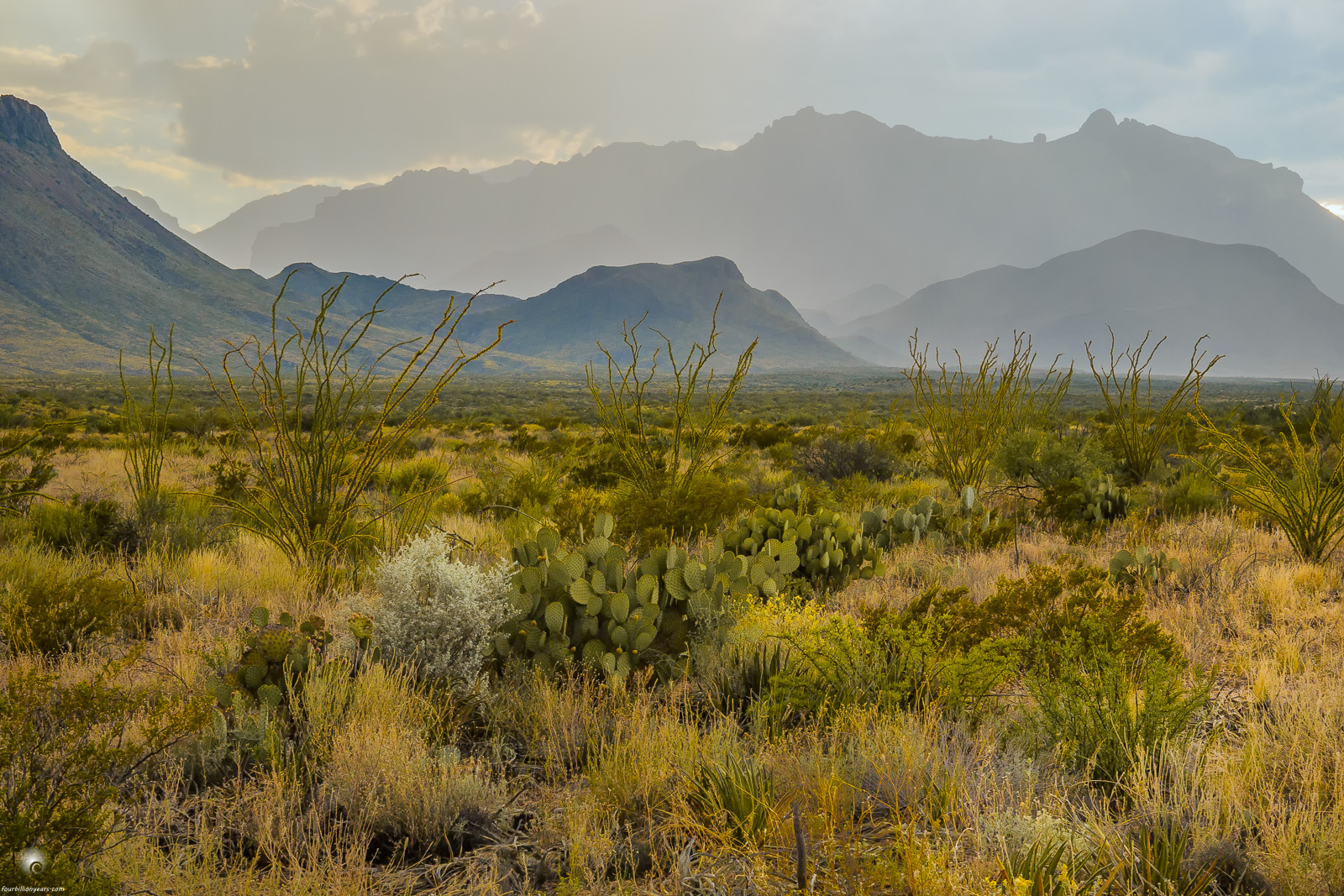
In my previous post, Gary commented that the desert looked very green. This is one of the reasons why Big Bend is such a magnificent place (and this from somebody who thinks of Death Valley, the Mojave, the Colorado Plateau and the Great Basin among the most magnificent places in the U.S.). The Chihuahuan Desert is one of the most biologically diverse arid regions in the entire world. Over the past quarter century I have visited Big Bend more times that I can remember, in winter (been snowed in in the high Chisos), spring, summer before the monsoon (June) and during the monsoon (July), and it is like visiting many different places in the same place. July can indeed be as green as this photo shows - saturation of this image is as natural as I could make it. I have seen xerophytic ferns growing next to prickly pear cacti. In Big Bend the biomes of the East and West of the continent merge, and you find oak and maple forests intermingling with junipers and pinyon pines, with Ponderosa pines and Arizona cypresses at higher elevations (ice age relics), and the ever present agaves and yuccas. It is also one of the places in the U.S. where you have the greatest chance of coming face to face with a mountain lion along a remote trail (I have not yet been that lucky, but, being a cat lover, I am truly looking forward to the experience - kitty, kitty!). The geology is equally varied - the southernmost termination of the Appalachian-Ouachita mountain system crops out in the extreme north of Big Bend, near Persimmon Gap (fascinating 400 million year old very deep marine sediments with weird fossils, but you have to know where to find them), then you have the massive Cretaceous (about 100 million years) limestone beds deposited in the ancestral Gulf of Mexico, into which the Rio Grande has carved its great canyons, and to cap it all off the Tertiary (about 35 million years) Trans Pecos volcanism which, among many others, gave rise to a humongous volcano that probably looked like Mt Kilimanajaro back then and that has now been eroded down and makes up the Chisos Mountains, shown in this image from a seldom shown perspective. One of my Ph.D. students did his dissertaion work on a smaller volcano a bit to the North, a place called Bones Spring. 
Did I mention that I love Big Bend?

Comments

8 comments
Comment posted by Jim Zablotny on July 3, 2017 at 7:53 AM
Hi Alberto,
A wonderful view of the Chihuahuan Desert --nice soft lighting and you show the many habitat types found in this region.  I especially like the lighting in this scene--very tranquil..................................Jim
Registered on January 17, 2004, 705 Posts, 3594 Comments
Comment posted by Rick Turner on July 3, 2017 at 7:56 AM
I am reading Ross Maxwell's "The Big Bend of the Rio Grande" and it is fascinating.  Two huge volcanoes about 39 million and 32 million yers ago. The Chisos are superb and like your phot of the high desert.
Registered on February 18, 2012, 534 Posts, 2755 Comments
Comment posted by Michael Lowe on July 3, 2017 at 11:46 AM
Nice tones to this image. Also like the seperation you achieved n the BG mountains. Normally I probably wouldn't like the plants braking the horizon line, but I think it works here cause they would probably get lost in the FG.devil
Registered on February 11, 2004, 777 Posts, 5252 Comments
Comment posted by Igor Doncov on July 3, 2017 at 2:41 PM
I spent some time going over your website last night and now better understand what you're after. Your images are more about capturing a special environment or habitat rather than as works of art with the considerations that go into that. This does look like a very special place and you've shown it off at it's best. It's a place that invites exploration. The distant mountains and sky came out particularly nice. There's a nice natural sense to this image without the drama we sometimes add/enhance in photoshop. The pale bush on the left sort of helps break up all that green and draws your eye to it. It's hard to comment on this for me because this isn't how I shoot. I sort of organize the elements (shapes, tones, colors) across the canvas and pay less attention to the overall environment. It just goes to show you how important it is to understand each one's approach before critiquing. 
Registered on November 22, 2014, 189 Posts, 2733 Comments
Comment posted by gary phillips on July 4, 2017 at 2:35 AM
Your explanation makes perfect sense, Alberto.  I am so used to seeing a desert devoid of green for much of the year.  There are times when that is not the case and your image looks excatly like that time. I like the ocotillos protruding into the mid ground.  There is a very graphic quality to their spacing.  I can appreciate your familiarity with this place, it shows in your images.  Very nice.
Registered on October 24, 2013, 185 Posts, 4136 Comments
Comment posted by scott lanz on July 4, 2017 at 8:17 AM
Fine image that really shows the rich, biodiversity of the Big Bend high desert, Alberto. I've never been there, but the combination of mountains and desert flora make this an intersting and scenic area.
Registered on November 14, 2003, 840 Posts, 12902 Comments
Comment posted by Brian Schrayer on July 4, 2017 at 9:29 AM
I like the layers present in the background mountains and the foreground compliments the scene nicely.  Your passion for this landscape comes through in your photos.
Registered on May 28, 2004, 114 Posts, 2890 Comments
Comment posted by Tony Kuyper on July 5, 2017 at 9:37 AM
The layering her is unexpected and effective.  This does indeed look like a beautiful place.
Registered on November 1, 2003, 364 Posts, 22328 Comments