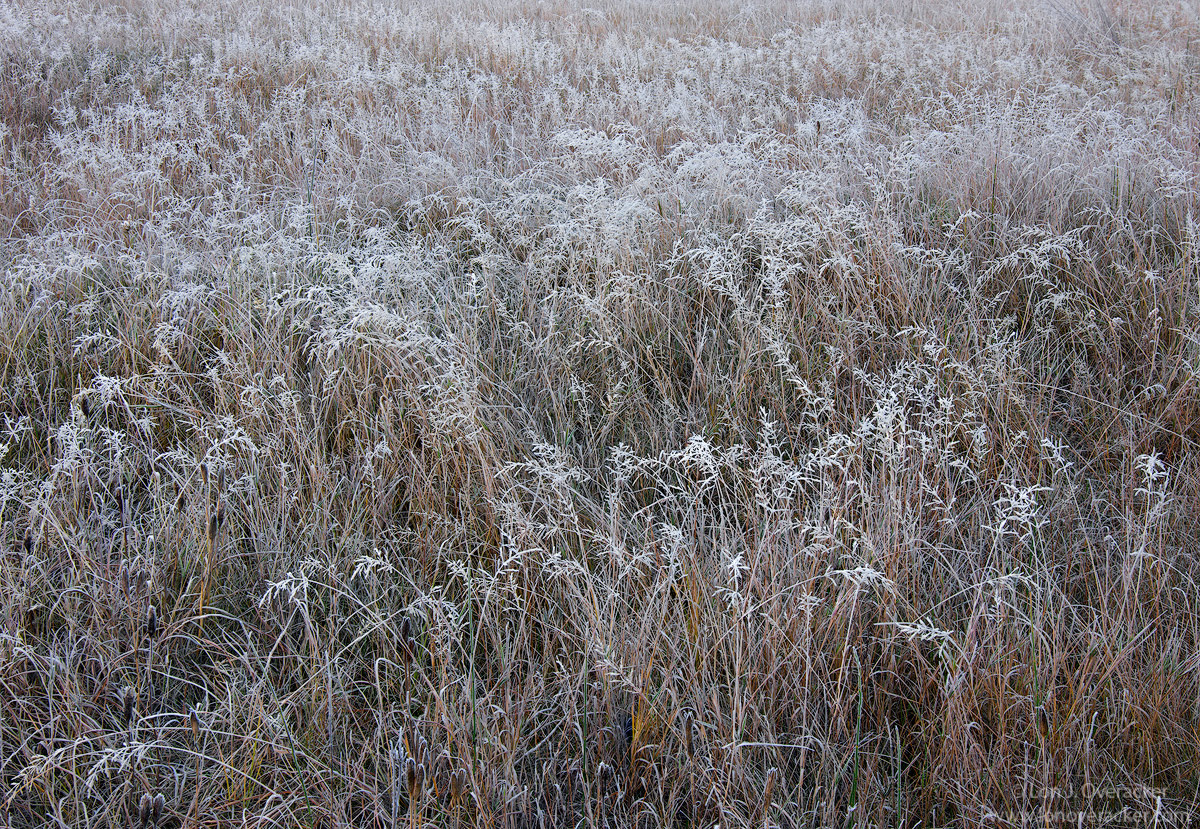
Endless
by Lon Overacker
Greetings and Merry Christmas to all who celebrate! I wanted post this today before heading out to make the rounds with family and friends.
Here is yet another image of grasses from the meadows of Yosemite Valley. As always I would love your comments and critique. suggestions welcome.
Nikon D800E
Tamron 24-135mm at 44mm
f/16, 4 image focus stack
Thanks!
Happy Holidays!

Comments
15 commentsIgor, this is very similar to the very first image I posted. I didn't think this was as strong and actually hesitated posting it. and you're right, just like many of the rock or charred bark images, there are many, many crop options.
A Happy and safe New Year for all!
How do you think the D800 compares to the 4x5 with detail? Have you made any prints yet?
Albert Darmo
Canada
Hey Chris -
Great question, but one that means different things to different people and also so many variables. Sharpness? Resolution? image size/area? enlargement/printing? scanning resolution? etc. etc.
If you're just looking at image size - or sensor size - the exposed surface area that info is recorded on, clearly, until they come up with a 4 inch x 5 inch digital sensor, a 4x5 will always contain more "information" in the image. If we just go by numbers The D800/E/10 has a 36MP sensor which provides a file that is approx 7360x4912 at native resolution. I scan most of my own 4x5 transparencies at 2400ppi which gave me a file size of aprox 8400x6700 or ~56MP. On the upper end, one could get a professional drum scan at 9600ppi for a HUGE file (not practically processable...) But even at 4800ppi I could get a file that would be equivalent to 225MP. Is the "detail" any better? I don't think so, but one could sure make a much bigger print without interpolating.
Having said that, it's not all about pixels right? lens quality, dof, edge softness, aperture, etc. etc. Speaking of DOF, there has long been this notion that 4x5 (well, view cameras in general) had a distinct advantage because one can focus near and far at the same time using lens and film plane tilts, swings, etc. You can literally get a foreground rock and a mountain top 5 miles away in sharp focus. Then stop down to f/45 and you get "everything" in focus. You can't do that with a single shot with a dslr, unless you have a T/S lens - but even that has it's limitations and can't do what you can do with a view camera.
Now, I recently thought about this and there is a significant shortfall with the view camera. Consider a single image. By definition, DOF, depth of field, is defined by the "range of acceptable focus in front of, and behind a fixed plane of focus." In other words, in the view camera world there is only ONE plane of focus. Yes, you can tilt that plane and get much more in "acceptable focus" than you can with a single frame of 35mm, MF, or digital. Here's the light-bulb moment. You can have an INFINTE number of "planes of focus" with digital and obtain not just "acceptable focus," but perfect focus edge to edge, front to back, etc. This is where focus stacking really creates an advantage where one can create more and better detail. Granted, focus stacking doesn't work in all situations (moving subjects...) and nor is it appropriate all the time (sometimes we want soft backgrounds, etc.)
I don't have a lot to compare yet, but I can say that the detail I'm getting with these grass images is considerably better than my grass images on 4x5, scanned with my $200 flatbed scanner. Remember too, scanning an image results in a "2nd generation" image, where is with a RAW digital file, that is 1st generation. In other words, if I looked at the transparency with a loupe on a light table (1st generation,) I expect similar detail, sharpness, etc. with a RAW image. However, if I had the same film images scanned professionally at a very high resolution, I believe the 4x5 could still surpass digital in amount of detail.
Anyway.... to answer your question, NO, I haven't printed anything yet. But from what I'm seeing in the files, I'm pretty sure they'll look great!
Maybe this is better as a post in one of the discussion forums?
Thanks again everyone!
Ed
Doesn't focus stacking produce unnatural sharpness in that distant and close objects are both sharp? Whereas MF has sharpness as the eye sees? I haven't seen this issue so much at NPN recently but years ago one of our members would produce eye popping sharpness that wasn't that realistic. Also I believe the sharpness was there without the richness in detail that a MF camera provides. If you look at Dietrich's last image there is something about it that's different than digital. Perhaps sharpness is not the right word but those fg rocks actually feel like cream. Digital feels more 2 dimensional somehow.
The camera on the other hand, can only focus sharply on one plane of focus as I mentioned above. The apparent or real softness in a photograph is simply physics and optics - again only a finite plane can everything in sharp focus. But the human eye sees everything in clear focus because those "planes of focus" are seen nearly simultaneously. A print, a web image, etc. is of course a single dimension. I think you're right in thinking that sharpness isn't what you're after. It's a "look" or a "feel" to an image - something that one can't really quantify, or at least I know it's hard to describe. I'm not sure if you're making a comparison, but comparing Dietrich's Jordan image that has a certain look with one of my focus stacked grass images, is like comparing a photo art image of a zoom-blur with a macro image of a black widow spider.
I wonder too - how much of what we perceive is because we know the source of the image, the medium. It might be an interesting exercise to see if folks can tell the difference between film and digital images with no other information other than what they see on the screen.
I plan on starting a discussion on this in one of the forums. Stay tuned. Thanks for the added comments Igor, I think this merits a further discussion.
Thanks all for your comments and observations!