
by John Tobias
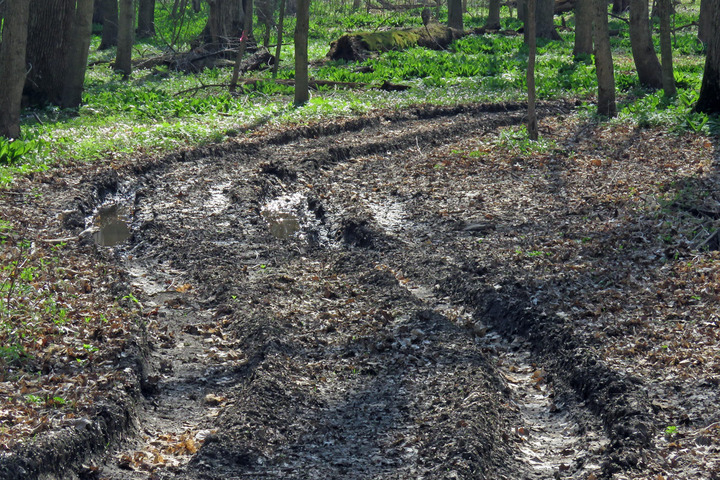
The annual maple tree sap collecting for maple sirup at Funks Grove in central Illinois provides funds to help support the grove and the nature center. But, the vehicles used to gather the sap does leave scars on the forest floor, scars which can lead to prohibited use by ORVs, erosion and loss of ground cover. Some seasons when fhe forest is dry there is no or little damage, but if it is wet and muddy tracks are left. It is quite a dilemma.
Canon PS SX60
1/250 @ F-8 ISO 200
Canon 3.8-247 @ 29.5mm
Comments
2 commentsJohn, I can understand. We see this here in our bottomlands and flatwoods. A semi-solution here has been achieved by regulatory Best Management Practices and contractual obligations, requiring the logger to fill in deep ruts and/or stop logging during heavy rains. That doesn't always work, as it is both judgemental and damage is quick to occur.
As for a solution for Funks Grove, hard to say without knowing the specifics of the machinery and the economics of the operation. Some shots in the dark would be: dual tires, wider tires, a different gathering machine (truck?), a better contract, fill in the ruts and plant cover, etc.
I understand this is just a small designated tract within the Funk family groves. Surely some kind of arrangement could be made with the family? Are they the one's who do the actual harvest?
The picture demonstrates very clearly the result of wet weather harvesting, Here, this would be considered slight to moderate damage. Here in the South, I have seen rutting 2 to 3 foot deep where logging was allowed to go on during wet weather.
Interesting issue. Economics vs. environment. Tough issue for the people involved to resolve.