You TURKEY!
by SandyRichardsBrown
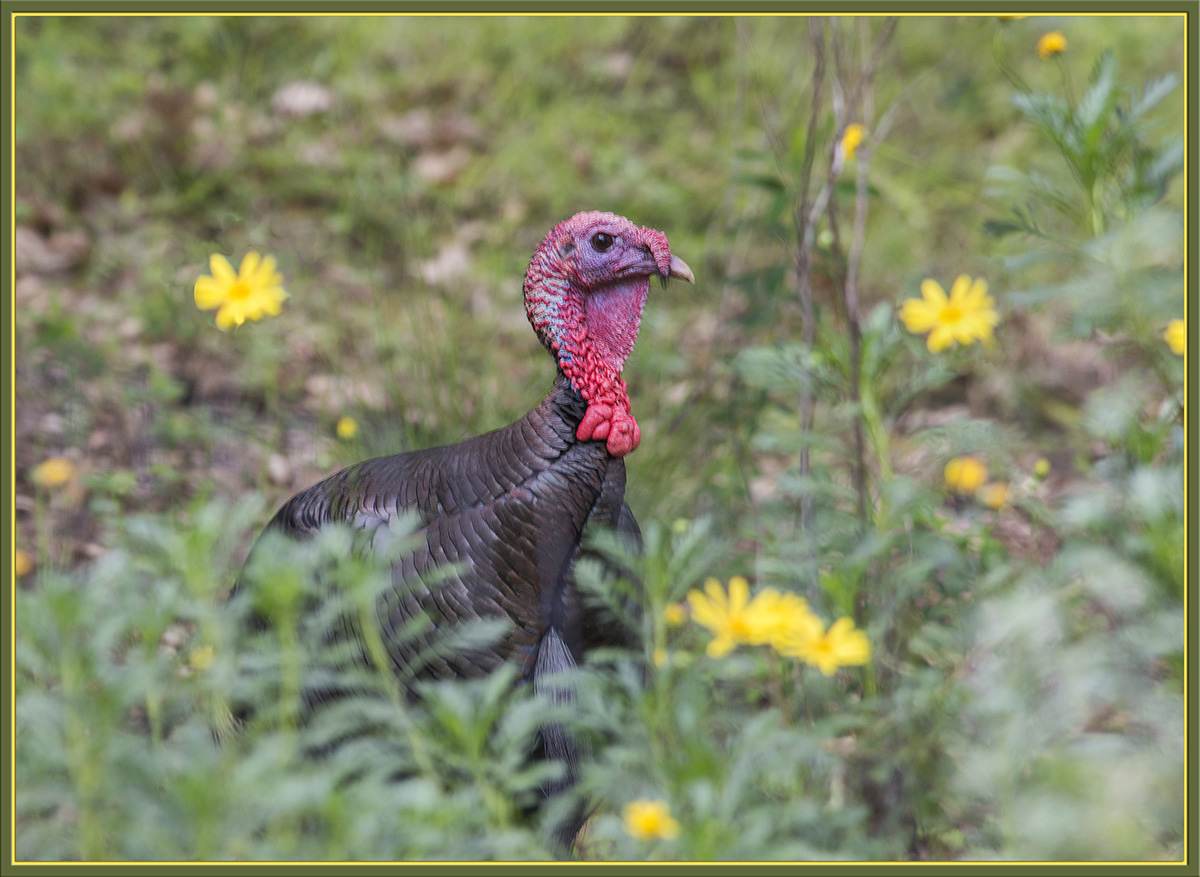
Wild turkeys are pretty and interesting birds, but here in California (as well as many places in the US) they have become very intrusive pests.
We have flocks of 50-100 that prowl around neighborhoods, leaving droppings on decks and sidewalks, scaring young children, blocking traffic, and generally being an extreme nuisance.
Recently, a neighbor's small dog was attacked and her stomach ripped open by the spur of a turkey. (The dog survived with major surgery and huge vet bills)
In addition, this is now spring and mating season, and they wake us up at dawn on a daily basis. We live on the edge of a 900-acre open area and the turkeys consider our acre THEIRS. They are NOT good neighbors.
More, for those interested, from Invasivore.com:
The wild turkey (Meleagris gallopavo) has been so beloved throughout American history that it was at one time founding father Ben Franklin’s choice for national bird. Pretty to behold, fun to hunt, and delicious to eat, it is no wonder that they have been so popular over the years that in many places in North America populations dwindled (also at fault was the loss of much of the wild turkey’s preferred forest habitat). In the 1940s and 1950s, reintroduction programs began in the US, and domesticated reintroductions have been so successful that some populations (such as in California and Texas) have reached nuisance levels and established in habitats outside of their native range. Today, flocks can be found in 49 states (sorry, Alaska!) as well as Europe and New Zealand.
Wild turkeys are omnivores that commonly feed on nuts, seeds, fruits, and insects, and they have been known to cause trouble by raiding farm crops. Wild turkeys nest on the ground and may provide considerable competition for other ground-nesting birds and other species, especially because of their large size and aggressive behavior. That aggressive behavior can also present considerable danger to pets, small children, and even oncoming cars. Wild turkey flocks regularly reach sizes over 30 birds and can even exceed 200 individuals in the winter time, leading to the potential for large overall impacts.

Comments
4 comments