‘Hog Wild’
by Mike Ramy
‘Hog Wild’
Digging up fields, woods and lawns, killing livestock and the natural environment, spreading disease; Wild Hogs have gone ‘Hog Wild' from a regional nuisance to one rapidly spreading across the nation. The animals know no fear, have a bottomless appetite and experts say the invasion of the feral hogs has become a major problem in the South that is progressively moving Northward.
The U.S. Department of Agriculture estimates that wild hogs, which can weigh more than 200 pounds, are responsible for more than $1.5 billion in agriculture damage and destruction every year. In 1987, there were an estimated two million wild hogs in about 20 states, primarily in the South and concentrated in Texas and Florida. Now there are an estimated six to eight million wild hogs roaming 47 states. This increase is unquestionably dramatic, there is no other species here in the U.S. that has increased at this rapid rate. Experts say the explosion in the wild hog population is partially due to escaping from farms and hunting preserves, they have no natural predators, and they produce two to three litters of 8 to 12 piglets a year.
The release of non-native animals is never good for an ecosystem, the natural balance is forever changed, and a prolific species will hasten the inevitable. The most destructive and prolific invasive animal in the US is the Wild Hog according to a recent University of Georgia survey.
The origin of Feral or Wild Hogs in the southeastern U.S. dates back to the early Spanish settlers who brought the first hogs into this region. These hogs were considered ‘domesticated’. The hogs that escaped and began living wild were considered ‘Feral’ hogs. In 1912, pure blooded Eurasian Hogs were imported into NC from Europe for hunting purposes. These hogs were scattered eventually from the Southeast to Texas were the population grew out of control. Texas has as many as 5 million Wild Hogs, Florida has about 400,000 and Georgia officials said they have too many to count. Virginia, Tennessee, South Carolina and North Carolina are currently in an uphill fight to keep their populations under control.
I have learned from several encounters that you should be very careful if you run across Wild Hogs in the wilderness while hiking. Hogs can smell people and they will turn and fight, especially if you travel with a dog or to protect their piglets. They’re mean, they’re aggressive and they will charge you. They’ll cut you or stab you with their razor sharp teeth and/or tusks or bull doze over you if you box them in.
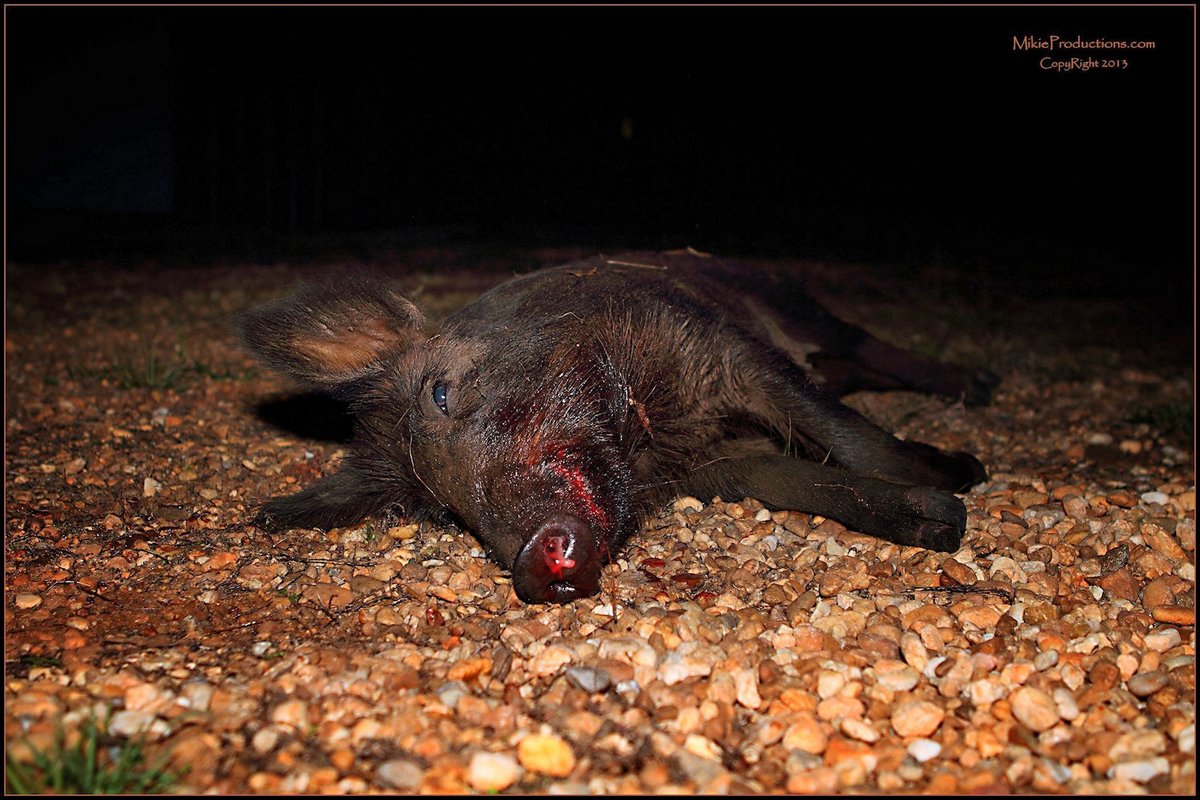
This wild hog pictured weighing in at 112 pounds, was obviously a nursing female and was hit by a passing motorist just after sunset. The damage was severe enough to kill the hog and render the car un-drivable. The occupants of the vehicle along this rural road in southwest Georgia were very shaken but unhurt. The area was so remote, there was no cell phone service available but lucky for them we were there to give assistance and take some pictures. We were offered an amble supply of ham and bacon to take with us as repayment for our kindness.
File Name Ramy_1262_CF35.CR2
Camera Model Canon EOS 7D
Hand Held
Shooting Date/Time 11/22/2013 7:05:03 PM
Author Michael Ramy
Copyright Notice Rock Art Ltd. All Rights Reserved.
Tv( Shutter Speed ) 1/60
Av( Aperture Value ) 2.8
Metering Mode Evaluative Metering
Exposure Compensation 0
ISO Speed 400
Lens EF24-70mm f/2.8L USM
Focal Length 27.0mm
Flash On
Flash Type External E-TTL
E-TTL II flash metering Evaluative flash metering

Comments
8 commentsExcellent image and commentary, Mike.
Sandy
At least there's an upside.. I'll have some eggs with that ham please
Great EPJ post Mike
More info on how introduction of the Russian Boar has turned these animals into predators. I believe in the south, the only other predator that would be a threat to these are the big cats, and we all know how few of them there are.
http://www.tpwd.state.tx.us/huntwild/wild/nuisance/feral_hogs/
I had no idea that these Wild Pigs were in US, we used to see them often when we lived in rural France, and they are very dangerous indeed. Every year several hunters are killed and their dogs.
Great image of a sorry situation
Ray