Nature Photographers Network
This is the preserved archive of the original Nature Photographers Network. The community continues at naturephotographers.network.
Bubbles WC#579
‹ PreviousWeekly Challenge GalleryNext ›

Bubbles WC#579

by John Clulow

Gallery: Weekly ChallengePosted April 10, 201353 views8 comments
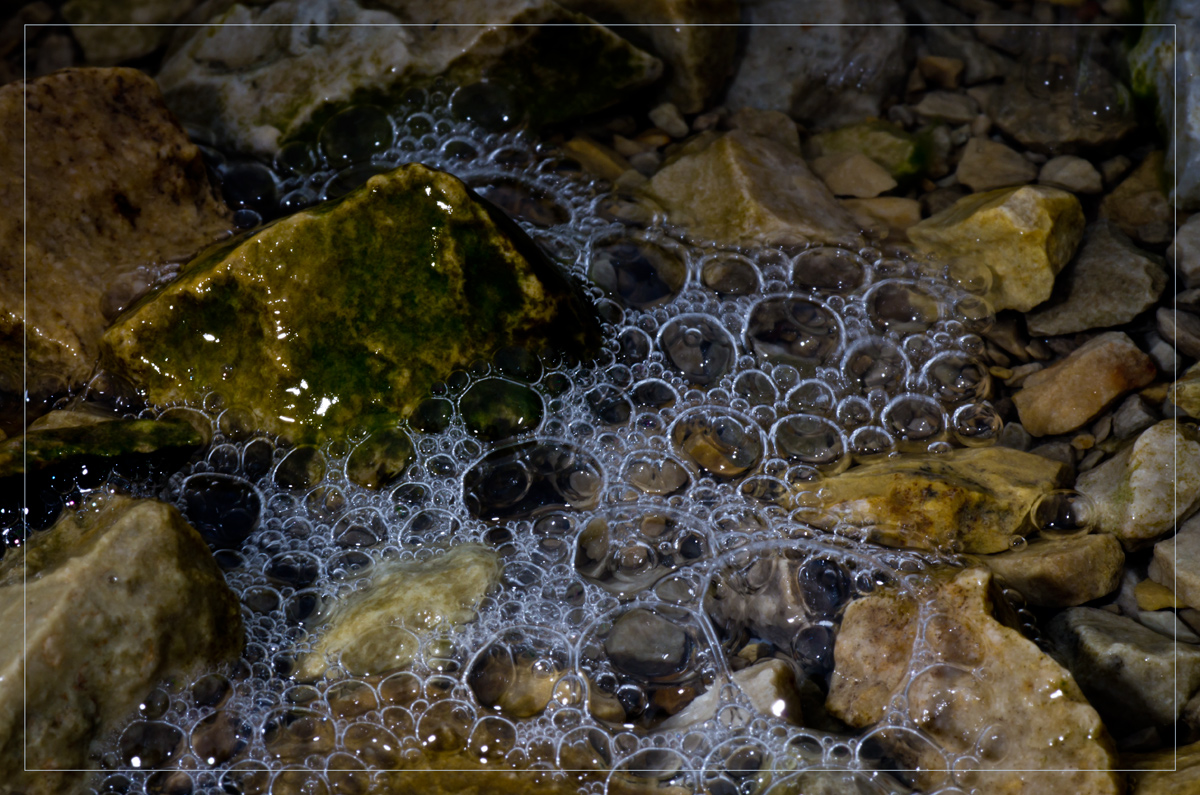
Went to Big Rock Quarry today, a local forest preserve in between rain showers. It is now a lake about half a km long. There were small waves coming in to the edge of the water that were making foam and small bubbles in the rocks.

Pentax K-5, Tamron 90mm macro, off camera flash manual, f/29, ISO 80, overcast, noon.

Advice on shooting this sort of thing would be welcome.

Comments

8 comments
Comment posted by Carolyn Derstine on April 10, 2013 at 6:09 PM
Bubbles are always fun to photograph but you do need to work quickly as they disappear so fast! I like your find here, John, and the comp you composed with these bubbles. I think it was good you added lighting but the flash points on the image are somewhat distracting. Possibly diffusing your flash or bouncing the flash off a reflector would have helped.
Registered on February 16, 2011, 610 Posts, 3684 Comments
Comment posted by John Clulow on April 11, 2013 at 4:15 AM
Thanks for you comments, Carolyn and John. I've been mulling over the diffusion idea and it would be to difficult for me to pull off outside the studio. Hadn't thought of the burn and dodge idea and I'll try that today.

It was overcast yesterday, and that light would have been perfectly diffused if I'd only thought of it at the time. Unfortunately, all the bubble shots I did used a flash. Luckily, however, today will be the same overcast, giant softbox sky, and windy too which should fuel the bubble machine. So I will head back there for a do-over. Not too often we get a chance like that. And hopefully I will be able to post a new and improved result. :smile:
Registered on November 1, 2012, 155 Posts, 1079 Comments
Comment posted by John Clulow on April 11, 2013 at 4:07 PM
I went back today but the bubble photo ops were almost non-existent. Shot this one at f/7.1, ISO 800, 1/160s. Despite issues with comp, motion, DoF, I can see the benefit of having the entire sky be the large light source. We still see specular reflectance on the bubbles, but it is much larger and more diffuse. So the experiment was good to do. I wish I had done it yesterday.

Secondly, I learned today that I could not make bubbles in the water where I shot yesterday no matter how hard I tried. It is clear that something is affecting the surface tension of the water. In some areas there is foam, other areas you cannot make bubbles that persist. If you look at this picture, you will see rainbow effects that are due to birefringence in some of the bubbles. I think that there is some pollutant in the water that is affecting surface tension and I am going to let the Forest Preserve know about it. Probably a surfactant, maybe a detergent of some sort.

Registered on November 1, 2012, 155 Posts, 1079 Comments
Comment posted by RL Potts on April 12, 2013 at 12:13 AM
Hello John. I was working with sea foam bubbles a month or so ago. There are many approaches and things to look for. I never did try flash so for me, that is uncharted water. The other night I watched a movie called Oz the Magnificent, or something like that at the theater. There was some excellent computer generated bubble work to inspire us bubblers. I look for highlights, reflections, rainbow colors, and patterns. Just like in the movies!

Your Tamron is an excellent lens for this. What I did was don rain pants, a rain parka and got down prone in the surf. I dodged most of the waves, but kept my camera out of the water. You have to look closely at what you are shooting and act quickly. I don't know whether your pentax has a tilting screen, but one would help in live view. Otherwise, it's roll in the sod and stand on your head. In addition, I think my best bubbles had round, black rocks for background. Some were shot in the sun and some in the rain. Both works. An advantage to working on the beach is that you can actually shoot upward into the bubbles some of the time, around rocks and other objects.

P.S. The foam in the ocean is caused by diatom skeletons whipped up by very active surf. I presume that fresh water diatoms would have similar properties.
Registered on November 24, 2003, 188 Posts, 985 Comments
Comment posted by Ed Williams on April 12, 2013 at 12:14 AM
This is a fun frothy photo John. Say that three times in a row quickly. . . cool shot.
Registered on December 28, 2010, 636 Posts, 3499 Comments
Comment posted by John Clulow on April 12, 2013 at 4:09 AM
Thanks for the diction excercise Ed :wink: and the advice RL. I love the refraction effects in the bubbles you posted. I hadn't thought of the effects on surface tension of decomposing algae, and that could be what is happening in this case, a result of plant matter decomposition over the winter months. Thanks for the information and ideas!

Registered on November 1, 2012, 155 Posts, 1079 Comments
Comment posted by Wayne Jones on April 12, 2013 at 1:16 PM
I liked the original post, but the lighting on the repost really makes a more pleasant image to view. Carolyn really knows her bubbles!
Bob's bubble expertise is appreciated, too. I have seen bubbles in streams that were caused by agricultural run-off, and also bubbles in wilderness streams where natural processes must have produced them, but I have no idea how to tell the difference. I am learning a lot from these images and the discussion.
Registered on April 18, 2007, 953 Posts, 6435 Comments
Comment posted by John Clulow on April 15, 2013 at 9:04 AM
This is an attempt to apply "luminance masks" to fix the glare from the flash in this one, a method I learned about from Mark Seaver recently.
Registered on November 1, 2012, 155 Posts, 1079 Comments