Nature Photographers Network
This is the preserved archive of the original Nature Photographers Network. The community continues at naturephotographers.network.
Wind Power
‹ PreviousAvian GalleryNext ›

Wind Power

by Lindy Martin

Gallery: AvianPosted December 19, 2010226 views14 comments
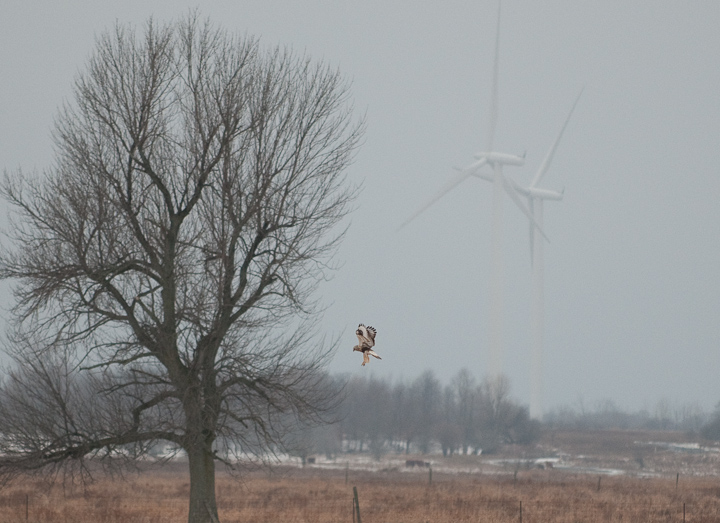
Need some advice. I just can not get close to these guys and tried a 2x teleconverter which resulted in worse images. I have some great fuzzy shots of a harrier!! What do I need to do to either get closer, or get a better lens or the new Nikon 2x converter? Also wondering what the highest ISO I can use on the D300 to exact detail without noise. (I only have lightroom 2)

Thanks in advance,
Lindy


f2.8 Nikon 70-200, 1/1500 iso 400 Nikon d300

Comments

14 comments
Comment posted by Luke Ormand on December 19, 2010 at 9:07 PM
A cool shot showing natural and man made use of windpower... I like how well the bird stands out and how large those windmills are.

Northern Harriers are very skittish and quite difficult to get close to. I am fortunate enough to have a few locations where they are reliable during the winter and yet I have only a handful of "acceptable" images. You should use your car as a blind (or better yet, use an actual blind) and implore a great deal of patience. Harriers, like most species are creatures of habit. Once you figure out their patterns, you can get closer but they will flush at the slightest movement.
Registered on February 4, 2009, 1093 Posts, 7035 Comments
Comment posted by Richard Ditch on December 19, 2010 at 9:10 PM
First, this looks like a Rough-legged Hawk, not a harrier.

Most of us who photograph birds work with at least 500mm, and many work at 600, 700, and even over 800mm. so, 200mm with a 2x will only get you to 400mm and you'll need to work harder at getting closer to your subjects.

Even with a lot of optical power there is no substitute to getting close to your subject. That means spending more time doing so and learning the behavior of your subjects.

Another "trick" is to find birds that tolerate people - lots of us have found parks, etc., where the birds allow closer approach.

As far as your gear is concerned, the Nikon TC20E converter is definitely your best choice for image quality. But don't expect miracles as all converters reduce image quality.

Finally, you need to develop your long lens skills: avoiding camera movement with a solid tripod; accuracy in focusing; smooth release of the shutter, etc.

There are no quick shortcuts to quality bird photos (unless you give up on most wild birds in natural settings and decide to work at a backyard set up where you lure the birds in close with a feeder or water).
Registered on November 1, 2003, 1031 Posts, 12705 Comments
Comment posted by Lindy Martin on December 19, 2010 at 9:37 PM
Thanks everyone, and yes, this is a rough legged. _ the Harriers were too bad to post. I looked at the TC20 E, and am thinking you mean to suggest getting the new aspherical version?? Thanks again, any thoughts on the ISO?
Registered on March 10, 2009, 60 Posts, 169 Comments
Comment posted by Ron Dudley on December 19, 2010 at 9:45 PM
Lindy, You have some great advice so far.

If you want harriers, find a refuge with harriers that has a fair amount of vehicle traffic (hunters or whatever), which the birds get used to and then shoot from your vehicle,. The birds will then often hunt close to the roads where hunting (by humans) is not allowed. And do it when it's very cold, with snow on the ground - for some reason that seems to make a lot of difference getting close to these birds. At least it does down here.

That way it's all as natural as is practical - with no setups and no baiting, which is my personal preference for what that's worth...
Registered on March 30, 2007, 437 Posts, 10915 Comments
Comment posted by Richard Ditch on December 19, 2010 at 10:45 PM
I looked at the TC20 E, and am thinking you mean to suggest getting the new aspherical version?? Thanks again, any thoughts on the ISO?


I have the original TC20E, purchased new in 1998, and almost every image I've posted here at NPN has been with the TC20E on my 300/2.8 AF-S Nikkor (also form 1998). I wouldn't mind having the latest version as I do get more color fringing than I'd like that should be better controlled with the aspherical version.

I rarely go higher than ISO 400 on my D200, but I've had some keepers at ISO 800. The D300 is supposed to be a bit better but I have no experience with one to confirm that.
Registered on November 1, 2003, 1031 Posts, 12705 Comments
Comment posted by Gary Gulash on December 19, 2010 at 11:11 PM
The hawk looks quite sharp at this size. I don't see any objectionable noise here. You have lots of shutter speed for this iso and a hovering bird. The lack of focal length is another matter...as in a longer lens= $$$$$.
It can be quite rewarding to work with birds in habitat type images, but I'll admit to owning a 600 mm lens because I also enjoy seeing those interesting details of a bird large in frame.
Registered on January 28, 2005, 879 Posts, 12098 Comments
Comment posted by dan elster on December 20, 2010 at 1:57 AM
This is a way cool image...love the windmills!

.Also, I shoot with a 400 and although I'd love to own a 500 + converters, I'm become pretty content w the 400. With any sort of raptor, staying in the car is your best bet on getting close.
Registered on September 23, 2005, 299 Posts, 2443 Comments
Comment posted by David Sewell on December 20, 2010 at 5:57 AM
Hi Lindy, I too have a D300 and prefer not to use it over 400iso. Having said that, it is quite good at 800 and acceptable at 1600. However, by 1600 I find that it is getting very noisy in the shadow areas. In all bird of prey photography, getting closer is the best option, but not always very practical. A big lens 500-600mm would help, but they don't come cheap. A cheaper alternative worth considering is the Sigma 50-500mm. A bit limited on aperture and you can't use a converter on it very easily. Even so, it is a lot of high quality glass for the money.

David
Registered on September 10, 2008, 63 Posts, 801 Comments
Comment posted by Mia McPherson on December 20, 2010 at 7:11 AM
Lindy,

I think you have been given some good advice already on the converter and focal length. I have the D200 and usually keep my ISO at 400 or lower but I have had acceptable, low noise images up to ISO 1000.

I like how this image shows the natural and manmade wind power.
Registered on June 25, 2007, 491 Posts, 12566 Comments
Comment posted by Ron Bielefeld on December 20, 2010 at 7:51 AM
Lindy, finding birds that are used to people is a big help as others have mentioned. Another approach is to find a wild area that the birds are using and watch them from a distance to start. Birds are creatures of habitat like most animals. They tend to fly the same flight paths day after day, hunting the same areas and arriving at about the same time each day (give or take an hour or two). My recent eagle post is an example. I saw this bird a few times before at about the same time and place, so I set up and waited. I was rewarded for my scouting efforts. Anyway, once you know the flight path and timing of a bird or two, get into full camo clothing and set up along the flight path very early in the morning or during mid-day for evening hunting birds and then wait. The birds will come and you will get some close opportunities. Like Rich D said, there is no short cut to getting good full-frame type bird images unless you use set-ups. Good luck.
Registered on December 6, 2008, 360 Posts, 7132 Comments
Comment posted by Terry Sohl on December 20, 2010 at 9:51 PM
When I first started in 2000, it was like a whole new world was opened up to me. Wasn't a birder or a photographer before picking up my first DSLR and suddenly trying to become both, and I was instantly amazed at the birds that had always been around me, but that I'd never really noticed.

My first subject I really tried to shoot were a pair of Bald Eagles that I saw along the river near my house. I'd never noticed them before, and tried very hard to get close enough for photos. My efforts resulted in shots where you could maybe tell it was a bald eagle from the few white pixels for the head, and a few dark pixels for the body! I was very discouraged.

I think the hardest thing about bird photography isn't the photography itself. That's easy. the hardest part is figuring out how to get close to birds. Agreed this is a Rough-legged hawk, and it's interesting that around here, about 95% of them are skittish, but every once in a while you find one that lets you get within 20 feet of it without it looking nervous in the least. Just getting out in the field and maximizing your opportunities is half the effort.

Other than that...for me, a pretty high proportion of my raptor shots are from my car. Cars make great blinds, especially when not moving. If you can observe a raptor like this that tends to use the same perches all the time, parking and patience are often a good way to get close.

Just keep at it! A lens longer than 200mm would definitely be very high on my list. Patience and persistence would be just as high on my list!!
Registered on November 1, 2003, 513 Posts, 6889 Comments
Comment posted by Sally King on December 21, 2010 at 3:35 PM
A very cool image. Love the windmills in the background and how well the hawk stands out even though he's small. Good luck with finding the birds that want their photos taken. There are a lot fewer of them and they're out there hiding amongst the camera shy birds.
Registered on December 2, 2008, 416 Posts, 4450 Comments
Comment posted by Angela McCain on December 21, 2010 at 10:01 PM
The new TC20EIII is great. I have gotten some great photos with the 70-200 and 2x which I sometimes travel with instead of the 300/2.8-if it's supposed to be a trip for my husband and not for photography (although they are ALL for photography). Almost all my images are with the 2x.

I've given up on getting close to hawks and harriers. They have to get close to me. Once I see them cruising fields, I park the car and just sit still until they come nearby-which they frequently (ok sometimes) do.

I bought a D300 as a back up and there is a lot of noise-I was surprised and disappointed with it's quality. I rarely go over ISO400 without being unhappy if I have to crop.
Registered on April 19, 2009, 367 Posts, 3589 Comments
Comment posted by Lindy Martin on December 21, 2010 at 10:40 PM
Thanks for all the great advice on this one. Guess I will try to get better with the equipment I have for now. Angela, I am disappointed with the noise on the D300 but am pretty sure that it is something I have incorrectly set in the camera. Can't wait for the weekend to try out all these great ideas. If anyone wants to donate a 4,5, or 600mm for a trial year or so, I would be happy to take it off their hands :jump:
Registered on March 10, 2009, 60 Posts, 169 Comments