The Cape Cross Reserve on the west coast of Namibia is the home of one of the largest colonies of Cape Fur Seals
(Arctocephalus pusillus), also known as Brown Fur Seals, in the world. About 80,000 to 100,000 seals live at Cape Cross - an impressive sight, and smell.

Brown Fur Seals breed in mid-October. Pups are usually born between late November and early December. The female spends the next several months foraging at sea and nursing her pup, who is weaned at four months old. The Cape Fur Seal's main predator is the Great white shark, but for the pups there are two other dangers: jackal and gulls. For the jackal the pups are easy fast food - they just walk into the chaos and grab one of the many pups. The Cape gulls are mostly looking for the afterbirth. I've also seen them trying to pick very young pups to death - not a nice thing to watch.
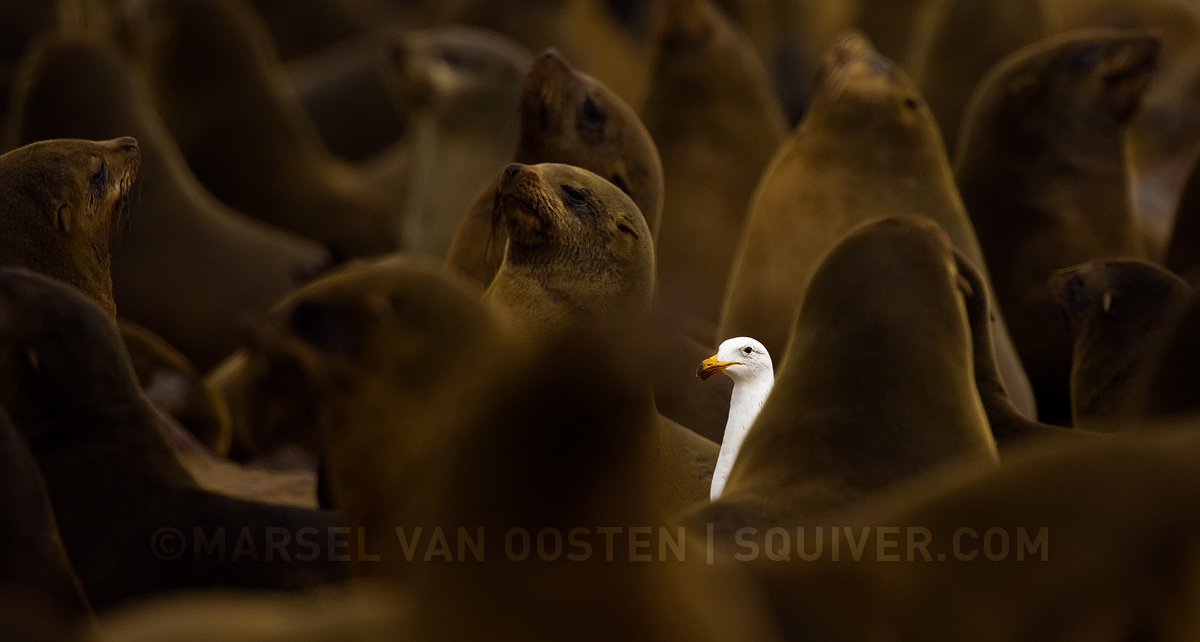
I took this shot on last year's Namibia workshop, and I since use it to demonstrate that your main subject does not necessarily need to be the largest element in the frame. Our eyes are drawn to bright elements in dark images and to dark elements in bright images. Even though the the seals are much larger and more numerous, your eyes to straight to the gull - the main subject. Spot metered off the gull.
It's a pity NPN does not feature smell-o-vision; you'd be impressed.
 Nikon D3, AF-S 600/4.0, 1/2500 @ f/4.0, ISO 400, beanbag

Comments
22 comments- Luke
Kurt - I agree that the oof seal in the fg does add to the concept, although I would have preferred to have one or two more there, and in a slightly different place (away from the gull). I tried to reorganize the frame on location, but my seal-herding skills were completely inadequate.
Gary.
Peter
Ken Archer
Love it
cheers
Rob