Nature Photographers Network
This is the preserved archive of the original Nature Photographers Network. The community continues at naturephotographers.network.
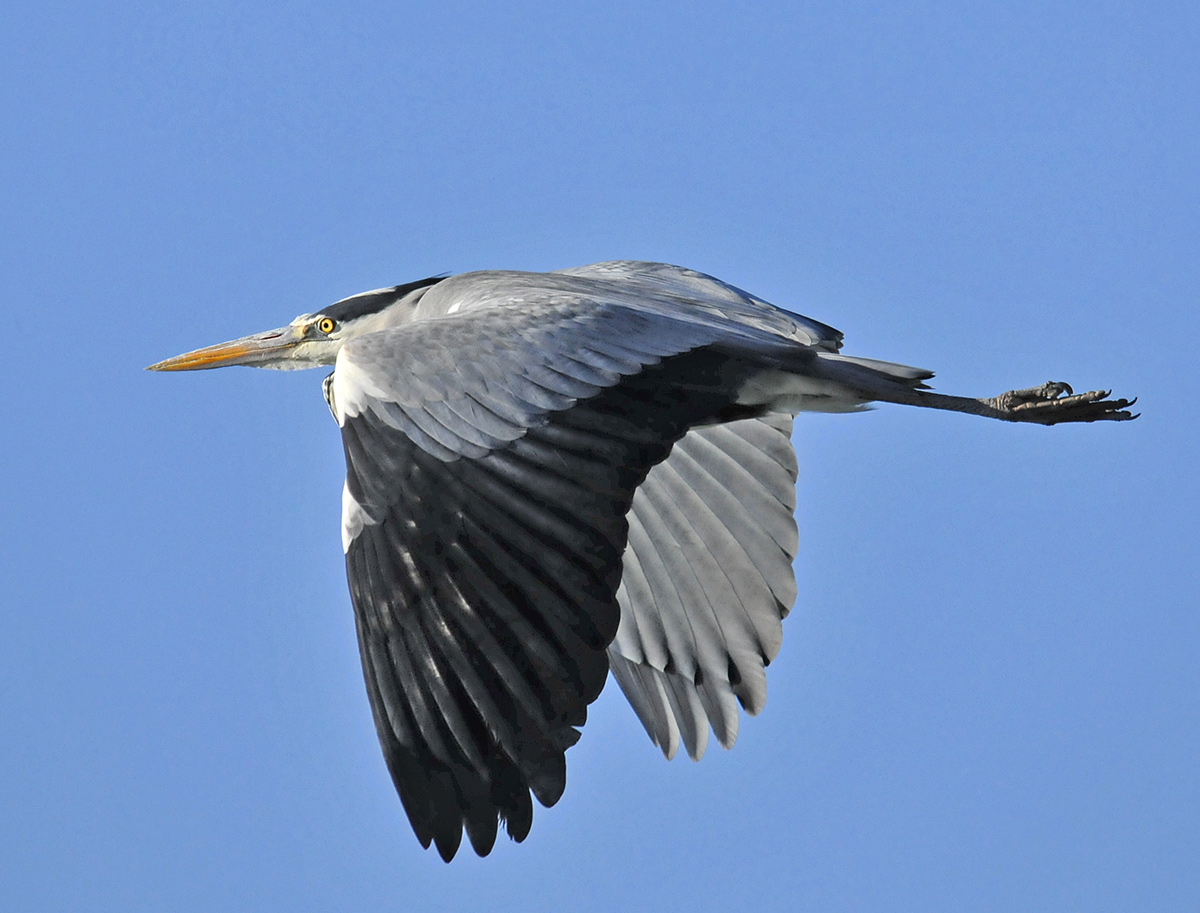
Grey Heron downbeat
‹ PreviousAvian GalleryNext ›

Grey Heron downbeat

by David Rowe

Gallery: AvianPosted January 9, 2014117 views8 comments
Sionnet, Switzerland
D300s 150-500mm at 500mm
ISO 800
1/3200s at f8 EV 0.00 WB manual Center Weighted Average
Hand held
Original TIF file cropped from 35M to 15M
Photoshop CS No sharpening

I dare say this one will draw some flack. I’m interested in the bird rather than the composition so I debated whether or not to make a more symmetrical tighter crop. My concern with this type of shot is the recurrent problem of wide halos. What causes them and may they be avoided? What steps may be taken to rectify the issue? Please Help.

Your comments, suggestions and criticisms are most welcome.
Thanks for looking

Comments

8 comments
Comment posted by Richard Ditch on January 9, 2014 at 12:27 PM
Web halos are usually the result of post processing adjustments to tone and contrast. A typical cause is use of shadow/highlight recovery applied to there entire image - it can "spill over" from the dark areas being lightened, or from the bright areas being darkened. So, if you are going to do S/H then it is best to make a careful selection (everything but the sky in this image) before using the S/H tool/sliders.

Another possible cause is from boosting contrast - that adjustment looks at boundaries between tones and makes the difference greater by making the dark side darker and the light side lighter.

Same thing with "sharpening." Sharpening is actually increasing contrast on a smaller scale.
Registered on November 1, 2003, 1031 Posts, 12705 Comments
Comment posted by Philip Hodgkins on January 9, 2014 at 1:17 PM
Richard has answered you concisely and well. I would add further that this is a decent image, considering the hand held aspect of a heavy lens. Practically, I suggest "going back to the drawing board" with Richard's suggestions in mind, paying close attention to the contrast, s/h, etc., and selecting the bird for separate treatment.

If this was a RAW image originally, it would be worth doing some modest changes in ACR. If it was a jpeg out of the camera, your changes can be the same, just even more modest, and tailored to correcting for the halo and reducing contrast for the bird.
Registered on July 24, 2006, 2741 Posts, 12349 Comments
Comment posted by Nate Chappell on January 9, 2014 at 2:29 PM
Very nice lighting and a good look at the eye here David. Richard covered some potential causes. If you limit your sharpening to just the bird and not the whole image that can go along way toward reducing halos as they are often caused by sharpening the whole image. :toast:
Registered on February 1, 2006, 1158 Posts, 19528 Comments
Comment posted by David Rowe on January 9, 2014 at 2:43 PM
Richard. Thanks so much for your immediate and helpful comment in imparting more 'tricks of the trade' I appreciate your help.
Registered on December 20, 2013, 133 Posts, 286 Comments
Comment posted by David Rowe on January 9, 2014 at 3:09 PM
Phil. Thanks for your constructive comment. It's so refreshing to get these views and insights.
Registered on December 20, 2013, 133 Posts, 286 Comments
Comment posted by David Rowe on January 9, 2014 at 3:14 PM
Nate. Many thanks for your appreciation and encouragement.
Registered on December 20, 2013, 133 Posts, 286 Comments
Comment posted by Dennis Plank on January 9, 2014 at 9:50 PM
Nice flight shot, David, with an excellent view of the eye. Looks like it's going somewhere with a purpose. I might be tempted to add a touch of canvas on the left.

:toast:
Registered on January 28, 2008, 1767 Posts, 23192 Comments
Comment posted by David Rowe on January 10, 2014 at 4:24 AM
Thanks Dennis for the encouraging comment. Yes, addition of a little more canvas on the left is advisable.
Registered on December 20, 2013, 133 Posts, 286 Comments