Gallery: AvianPosted December 16, 201387 views7 comments
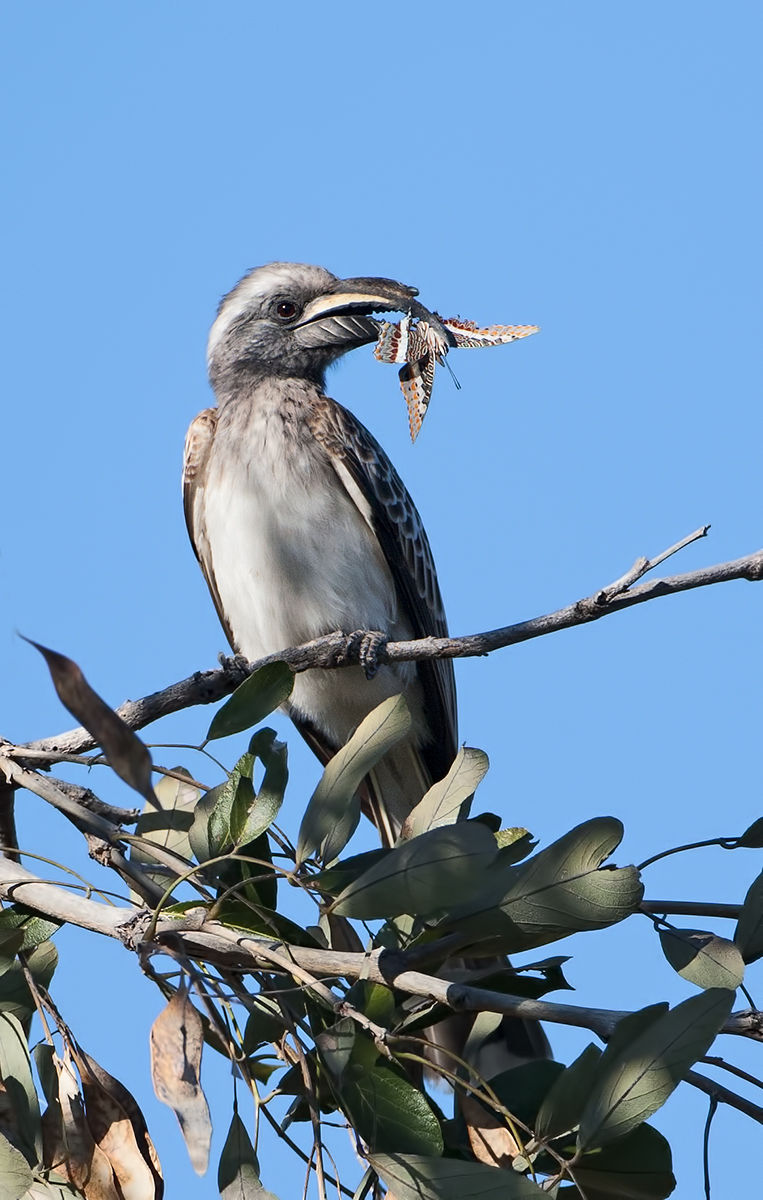
Here is a Grey Hornbill made much more interesting by the moth in it's beak.
Taken in Kwando Concession, Northern Botswana.
EOS 1D MkIII
500mm F4
F 7.1
ISO 400
1/1250
EV +0.33
Hand-held from open vehicle
Comments
7 comments
Comment posted by Martin Dunn on December 16, 2013 at 6:33 AM
Yes the moth adds interest and colour Ken.
It looks as thought he moth and the front of the beak are your focus point as the light plumage on top of the head seems to be lacking a bit of detail.
I'd never noticed those diagonal stripes on the lower part of the beak before.
Registered on February 20, 2013, 198 Posts, 1011 Comments
Comment posted by Sandy Scott on December 16, 2013 at 4:37 PM
I love the shot!!
Registered on December 6, 2013, 85 Posts, 345 Comments
Comment posted by Luke Ormand on December 16, 2013 at 6:37 PM
Awesome bird and even better prey which make up for the not so great light
Registered on February 4, 2009, 1093 Posts, 7035 Comments
Comment posted by Sharon Hallowell on December 16, 2013 at 9:05 PM
Amazing that a bird with a bill that size can still hold this moth so gingerly! Yes, the light is a bit harsh but it has created some interesting shadows amongst the foliage. Nice capture for you both! Sharon
Registered on November 1, 2003, 392 Posts, 4810 Comments
Comment posted by Kurt Bowman on December 16, 2013 at 10:26 PM
Really nice work again Ken. Love the meal...the small version doesn't do this justice.
Registered on June 19, 2008, 1005 Posts, 8028 Comments
Comment posted by Ken Watkins on December 16, 2013 at 11:57 PM
Thanks everybody
Registered on December 15, 2010, 1537 Posts, 4877 Comments
Comment posted by Rob Drummond on December 17, 2013 at 1:02 AM
That's a serious moth Ken - very nice capture
Registered on November 8, 2003, 617 Posts, 8267 Comments

Comments
7 commentsIt looks as thought he moth and the front of the beak are your focus point as the light plumage on top of the head seems to be lacking a bit of detail.
I'd never noticed those diagonal stripes on the lower part of the beak before.