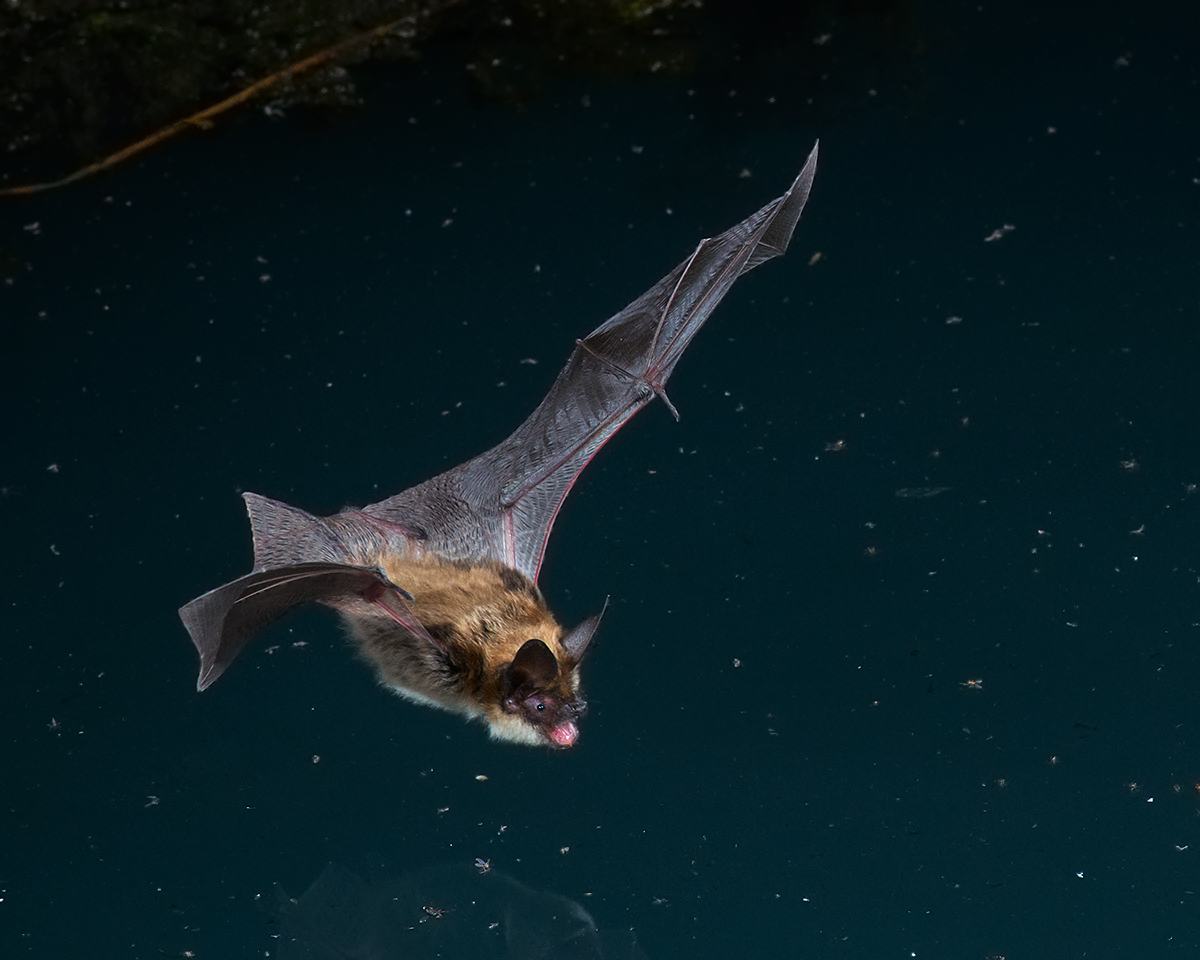
Long-eared Myotis
by Charlie VanTassel
This is a different type of Bat from my last post. I'm still working on the setup, but so far so good. I have 4 types of Bats here and I'll try to get one of each. A new pool for shooting will let me change the angle of view for future shots....
D800
4 flashes
laser trigger
200mm
1/250
f16
iso 800

Comments
13 commentsI like this one also, the water makes for a great back-ground and the reflection a real bonus.
Your efforts are well worth the results so far.
LOVE bats, and sure wish there was a batty pond near here.
Sandy
Lon has a good point there about the twig. Further I think this could have been even better with the reflection included. But these are no nits; great work!
Max
Look forward to more in this series - Well done
Very envious
Camera is set on manual to sync with the flashes at 1/250. F16, iso 800. Flashes on 1/16 power to get a high flash speed. You'll need 4 flashes. Lens is also set on manual focus. Prefocus on the spot where the Bat is most likely to go through the beam. Usually if you watch them for a while you can see that they fly into the wind and always come to the same spot. You can guide them by screening off most of the surface and just leave a 1 x 3 meter "runway" for them to swoop into for a drink.
The best time to get them is just after sundown and just before sunrise, but they'll come sporadically all night long. You'll need to set up your camera to run off of a 12 volt battery so that it can be on all night, otherwise you'll have to stay up all night changing batteries. These triggers keep the camera in "on" position, so there is quite a battery drain. My Nikon D800 can use a 12 volt adapter so that I can power it off of a car battery. Also, you'll need battery packs for the flashes. Basically you set up in the late afternoon and leave everything on until next morning. Make sure to check your focus, lighting, etc. before leaving the setup be. On a typical night I get around 200 photos.
http://www.dailymail.co.uk/sciencetech/article-1213851/Stunning-shots-thirsty-bats-swooping-lick-water-garden-pond.html
http://nerotrigger.com/
This is very similar to the multi flash photography used on Hummingbirds. It is the high speed of the flash, and not the shutter speed of the camera, that freezes the action. Camera at f/16 - f/22 gives you the depth of field to make sure that you get them sharp.
Last night I counted approximately 90 Bats coming out of my Bat Box at sunset.
Best Regards,
Charlie VanTassel