The Breach!
OK - I have noticed (like most everyone probably has) that there have been a lot of bear images posted lately, and I readily admit that I have contributed to that. So this time, something different...
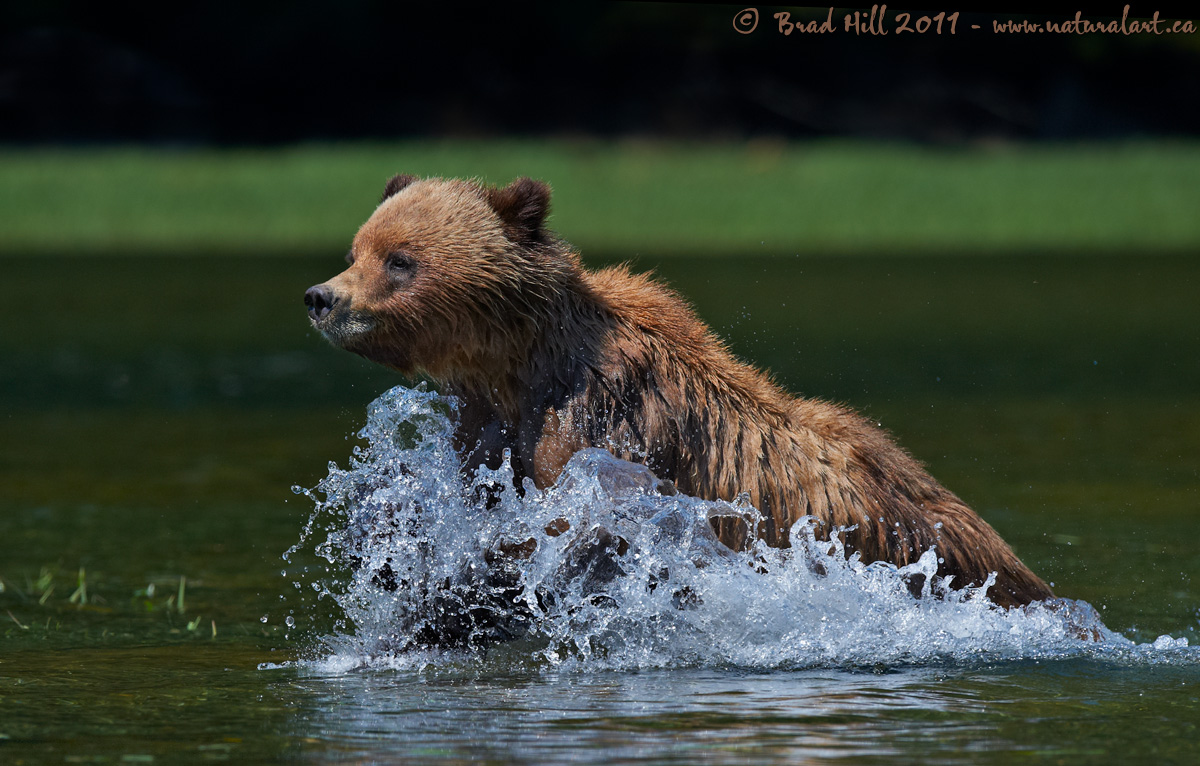
This is a shot of the rarely photographed (I THINK this is the only image in existence of one) Humpback Ursid. A semi-aquatic species, this dangerous carnivore is known to swim long distances under water and then - without warning - breach in a manner reminiscent of its distance relative, the Humpback Whale. The Humpback Ursid is easily distinguished from its close relative (the Brown, or Grizzly, Bear) by its lack of front legs (IF this was an image of a grizzly bear you could clearly see it's front legs exiting the water). The main prey of the Humpback Ursid is wildlife photographers, which it captures by leaping out of the water and snatching unsuspecting photographers that are leaning too far out of their Zodiac. Like sharks, most Humpback Ursid attacks occur in shallow water (which is probably related to the distribution of their primary prey source).
Luke - I believe you thought my last post (despite being of an animal in a dark forest) was "quite flat in contrast, color and a without a general feeling of "depth"..and didn't "pop". Well...this one is for you!

Subject: Female Humpback Ursid (
Urus arctos humpbackus) breaching after long sub-surface swim.
Location: Khutzeymateen Inlet - Great Bear Rainforest, BC, Canada
Camera: Nikon D3s
Lens: Nikkor 400 mm f/2.8 VRII lens - handheld from floating Zodiac
Exposure: 1/2000s at f5. ISO 280. -0.67 stop compensation from matrix metered exposure.
Crop: Very minor - this is about 95% of full-frame image
A slightly less tongue-in-cheek account of this image (including processing details and a discussion of setting up the Shooting Banks on Nikon cameras to be ready for action) is available here on my website:
http://www.naturalart.ca/galleries/latest/.
Comments and critiques welcomed - probably best to view the larger version prior to doing so! Feel free to post any accounts of additional sightings of this species...
Cheers...thanks for looking...
Brad
PS: I'm leaving Friday for a week of shooting up in the Haida Gwaii (formerly known as "The Queen Charlotte Islands" - and not "Prince") - so this will be my last image post for a while...

Comments
15 commentsThe bear leaps off the screen - so much color, depth and that intangible "pop"! It's photos like this that make me lust for 3D capable DSLRs and monitors. . . maybe one day in the distant future it will be a non-gimmick reality. The only thing I'm not crazy about is the intersection of the green with the head. It's not that it's distracting per se - but I think it takes away from the very basic elements of this photo which are so nicely contrasted with the action in the water. SS looks perfect and nice thta the ISO was able to be so low - gotta love that 400 f/2.8!
Thanks for telling us about this rare species...now I know not to go too far out of a Zodiac
All kidding aside, this shot is right up there with your best - I do find myself wanting a bit more space on the left side of the image, super minor nit though.
Looks like a few responses are in order:
1. Luke - you said " The only thing I'm not crazy about is the intersection of the green with the head.". Me too - wish that shoreline wasn't there - no argument. But it was...and couldn't do anything about it (I do have some other shots - but of a bear with legs running in the same water - not a Humpback Ursid - where it is lower in the water and there is no overlap of the head and shoreline...)
2. Kurt - you said/asked: "I assume they eat Salmon?" Only seasonally (in the autumn). The only reliable year-round food for them (besides the sea-grass that Charlie pointed out) seems to be wildlife photographers. And...much higher protein-levels in that inexhaustible food supply - and also very good source (on average) for high-energy fat.
3. Guy - you said: "I do find myself wanting a bit more space on the left side". I can see the logic of that - I cropped a little off that side so could accommodate that.
4. John - you said: "but how does a long under water swim allow the head and top of the back to be dry?". One benefit of eating those photographers - those high-energy morsels are easily metabolized into oils that cover their fur - kinda of a "water off a duck's back" sort of thing - ever seen a wet-looking duck??
Cheers...
Brad
Great capture, love the lighting on the fur and the frozen action of the splashing water!
WIshing you all you're wishing for during your upcoming trip :^)
I would however like more space on left. Rest all god with me. I also have noticed since you pointed out this to be a different species of bear that the muzzle of the bears is much shorter than its Brown Bear or Grizzly cousins. It can also be a sub adult in which case there could still be time for muzzle enlargement and ofcourse the humps. Well done on getting this rarity
Jagdeep Rajput
I especially like the determined look I see, fantastic image