Dead Reckoning....
by Robert Beideman
So, there was this time when I was a child that, while in the midst of a fishing trip, my father (a charter boat captain) told me that I'd have to navigate home from 80 miles out in the ocean without instruments...someday. He warned me that he wouldn't tell me when I'd have to perform this rite of passage...but told me that I had at least a year to learn.
And so the years passed...
When I was 17, I found myself again in the ocean...80 miles from the inlet that led to our little island. And my father shut down all of the electronics on the boat. Hearing from him only that "it's time," I left the wheelhouse and looked to the sky to get my bearings.
The mission was clear...traverse 80 miles of ocean with a printed chart, a compass, and the stars. Four hours later, the sun broke the horizon and I saw the reflection of the bell buoy that signalled the entrance to our inlet. Three months after that, I passed the exam and became a licensed sea captain.
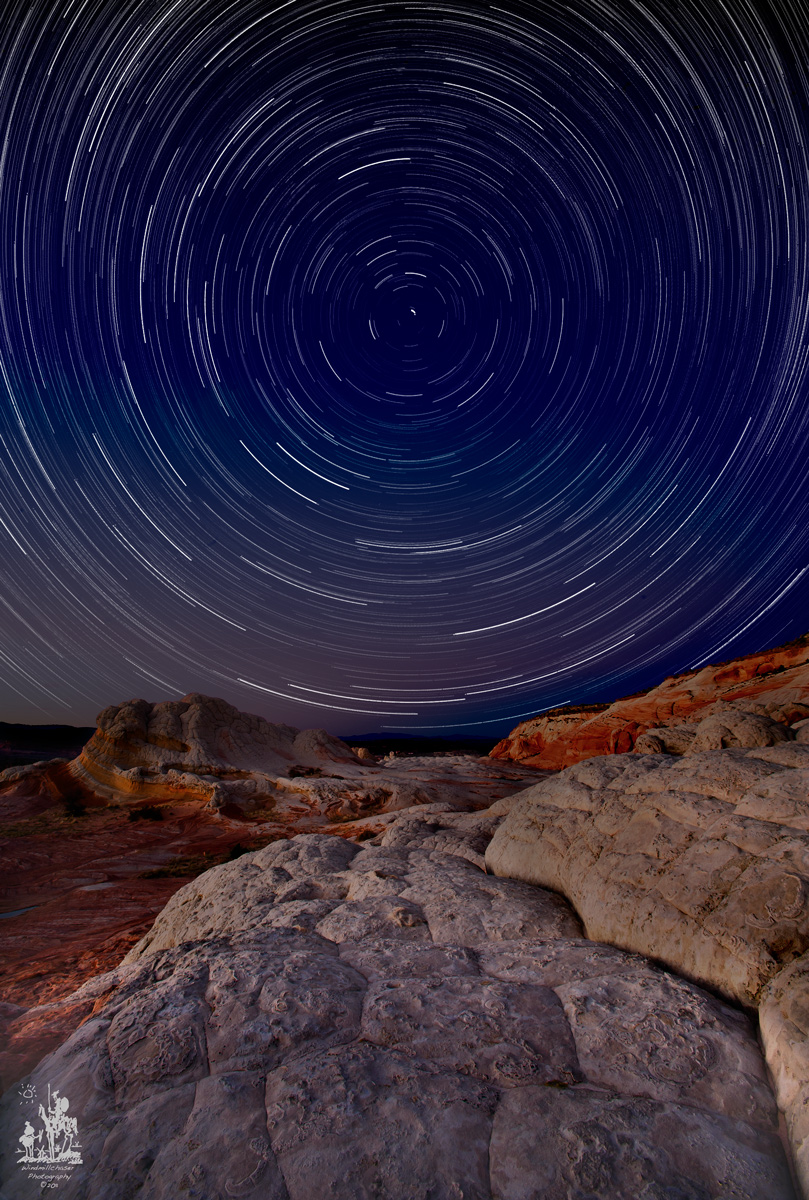
And so...at 36...I found myself in far northern Arizona...with the same tools...but just before twilight...so no stars. Taking a serious guess at the magnetic declination (I hadn't done my homework...and I live in Boston)....I set up this composition. I suppose that something resonated in me years prior...because it was the composition that I'd hoped for.
I'll save the details of "how"...and hope to hear what you all think about the result....the good and the bad. I've gone through a number of iterations trying to get this one right...so any feedback is really welcomed...
Thank you for looking
Robert

Comments
13 commentsThis is really cool, I am not sure if you were able to do this with 2 images, or did you stack many sky images to do this. I am still working on some similar images in the SW from my recent trip. It was cold enough for me to take the sky image in one take for around 3.5hrs.
I am curious about the light source you had from the side light present?
well done
The story was great and yes I think I like this quite a bit. The how, photographically, is of no concern, the how before and the resulting photo speak for themselves.
Nevertheless, the light and color are awesome.
I'm curious to know the technical details here...
Thanks all for the input and the comments! It's incredibly valuable for me to hear the thoughts and ideas of this group!
@James: The sidelighting was the result of the late sunset image that represents the foreground of this blend (thus the residual color in the horizon, as well). See below for more detail.
@Floris & Robert: The foreground, I think, was a little more interesting around sunset than it turned out to be in this image. Regardless...it was the comp that I came up with....and stuck with for a number of hours out there! As many of you know, it's a pretty insane place...and finding something that simplifies the insanity while still representing the color variations out there was important to me. I do think that there are still some decent leading element in the FG...but they certainly don't compare to a few of the shots that I've seen from Floris lately!
@Aaron: Since you mentioned a desire to know the tech details...here ya' go. Shot at 14mm with a D700. It's a foreground shot taken around sunset (thus the sidelighting)...a walk to camp followed by a few beers...then a return to the rig to set up continuous 30-second exposures (about four hours of them). All sky exposures then screened together, and blended with the FG using a lum. mask. A second instance of the FG as a multiply layer, and some FG adjustments to significantly reduce exposure and locally improve contrast. Hope that helps!
Again, thanks all!!
Robert