Nature Photographers Network
This is the preserved archive of the original Nature Photographers Network. The community continues at naturephotographers.network.
American White Pelican
‹ PreviousAvian GalleryNext ›

American White Pelican

by Mia McPherson

Gallery: AvianPosted July 23, 2010109 views16 comments
Pelecanus erythrorhynchos

Ron Dudley and I got back from a trip to the Uinta-Wasatch-Cache National Forest yesterday. We basically bombed on getting bird images but did get some of a year-old male moose who was so close all I could do was take headshots.

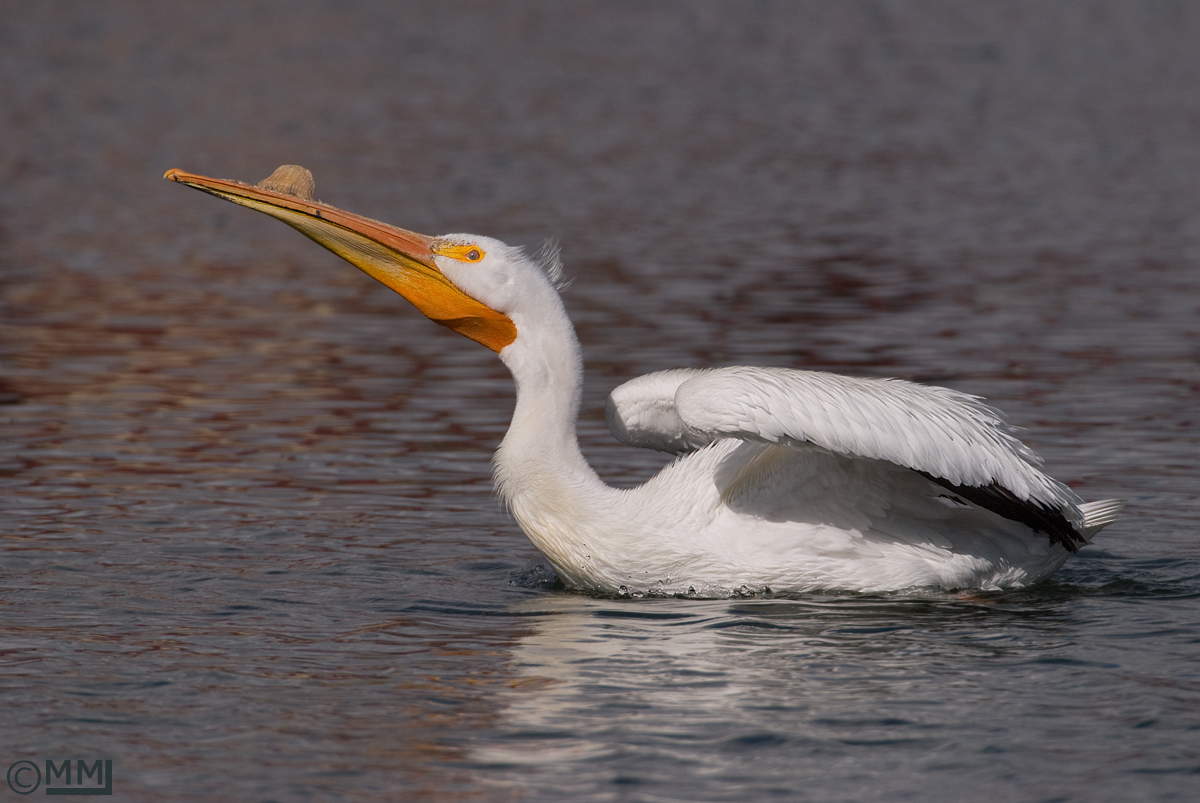
Nikon d200, tripod mounted 200-400mm VR f/4 and a matching 1.4x TC at 400mm, f7.1, 1/3200, ISO 250, -0.3 EV, full frame, natural light. larger version provided for evaluation of sharpness and detail. Taken at a pond near where I live.

White Pelicans can be challenging to expose properly and show detail in the plumage as most white birds can be but with the correct settings and the right light it can be done. The key for my exposure for this image was using -0.3 EV compensation to help control the exposure of the whites while still allowing detail to be seen in the feathers even in the shadow under the wing.

I do wish I had taken the time to zoom back a little, this is a smidge tighter than I would normally like.

As always, I sincerely appreciate your comments & critiques.

Comments

16 comments
Comment posted by Jim DeWitt on July 23, 2010 at 11:59 AM
Very nice work on the whites, and a fine shot of a post-breeding plumage male. It's a good trick to get this close to a White Pelican; I've found them to be pretty spooky. As always with these large birds, there's the problem of comping the bird in the frame; the detail versus tightness debate. I think you struck a nice balance here. I like your signature low angle. And you usual impeccable techs. Fine work.
Registered on August 28, 2006, 1240 Posts, 8506 Comments
Comment posted by Steve Balke on July 23, 2010 at 12:10 PM
Beautiful detail here as usual with your images, Mia. Info in caption regarding how you achieved it is much appreciated. Interesting looking bird too. I was reading about the "horn" on the upper mandible clearly visible here. Apparently it disappears after breeding. No info on its purpose though? :toast:
Registered on June 18, 2009, 229 Posts, 2915 Comments
Comment posted by Mia McPherson on July 23, 2010 at 12:55 PM
Thanks Jim & Steve for your critiques.

Steve, The carbuncle is a growth on the bill of American White Pelicans that occurs during the breeding season. It is a natural feature of the American White Pelican but I do not know it's purpose or if its presence is a selective breeding thing. I saw an image posted elsewhere in a different forum where the person said the image was "perfect except for the growth on the bill". I found that statement amusing because it is part of the changes that occur when White Pelicans go into the mating season. It is really no different than the change in color of the bill & lores of a Reddish Egret in breeding plumage and I have seen photographers scramble like fiddlers crabs over each other to get a shot of a breeding plumaged Reddish Egret.
Registered on June 25, 2007, 491 Posts, 12566 Comments
Comment posted by Steve Balke on July 23, 2010 at 2:33 PM
Very interesting. Such a strange signal! The preference of females for mates with certain characteristics has been blamed for beautiful coloration in many birds that cannot be otherwise explained ("Bird Coloration", G.E. Hill). Maybe female pelicans like carbuncles...if only the males are showing this characteristic...! Thank you for your response, Mia. :smile:
Registered on June 18, 2009, 229 Posts, 2915 Comments
Comment posted by Luke Ormand on July 23, 2010 at 3:14 PM
Perfect exposure. There looks to be some softness on the upper neck/head. I would have guessed motion blur but not @ ISO 3200 which makes me think you missed the DOF. f/9 would have served you better I believe.
Registered on February 4, 2009, 1093 Posts, 7035 Comments
Comment posted by Mauro Pasquero on July 23, 2010 at 3:26 PM
Very, very nice shot, Mia. beautiful light! It is amazing how a small correcection can produce a perfect expoure. Really well done!
Mauro
Registered on January 21, 2010, 650 Posts, 2500 Comments
Comment posted by Dennis Plank on July 23, 2010 at 6:46 PM
Perfect, Mia. The detail really pops out in the larger image. I like the water drops and the plumage and beak textures show up really well. If I'm reading the shadows right,it looks like you had a bit of side lighting to help bring out the texture. :toast:
Registered on January 28, 2008, 1767 Posts, 23192 Comments
Comment posted by Ron Dudley on July 23, 2010 at 7:19 PM
Perfect exposure Mia and I love that pose as I find it quite difficult to catch them doing something "interesting". Your composition works very well for me and I think sharpness is just fine. Personally, I think the carbuncle adds interest - always have. Very well done.
Registered on March 30, 2007, 437 Posts, 10915 Comments
Comment posted by Rohn B. McKee on July 23, 2010 at 9:01 PM
I love this Mia. The whites are perfect. Great pose, as he is swallowing. Very efficient fishermen these critters.
Registered on November 18, 2008, 109 Posts, 415 Comments
Comment posted by Charles Gangas on July 23, 2010 at 10:14 PM
Nicely captured Mia, great details in the whites and a very cool wing position. I think the comp works well in light of your reservations, and thanks for the insight on your exposure technique. :toast:
Registered on August 12, 2009, 544 Posts, 2414 Comments
Comment posted by Rob Drummond on July 23, 2010 at 11:50 PM
Great job on the exposure Mia and I like the 'about to take off???' pose or is it just a stretch?

cheers
Rob
Registered on November 8, 2003, 617 Posts, 8267 Comments
Comment posted by Jim DeWitt on July 24, 2010 at 12:58 AM
Here's what BNA has to say about the "horn":
A highly fibrous, epidermal plate arises vertically and dorsomedially about one third distance from tip of upper mandible, plate (somewhat erroneously termed a “horn”) highly variable in size with base being 40–80 mm and height ranging from barely detectible to more than 60 mm, with that of males in pairs seemingly larger (FLK). Function of plate not clearly defined, but it is probably involved in courtship or agonistic behavior during pairing and territory establishment; plate shed during Presupplemental molt.
Registered on August 28, 2006, 1240 Posts, 8506 Comments
Comment posted by Derrick Lipinski on July 24, 2010 at 1:28 AM
Wonderful exposure, Mia. Great pose too. I don't mind the tightness in the frame as I tend to like ID shots showing every detail. :smile:
Registered on October 5, 2007, 58 Posts, 2039 Comments
Comment posted by Giorgio Gregori on July 24, 2010 at 4:12 AM
Very nice. As others say, perfect exposure and sharpness. The extended neck and initial wingspread give the shot dynamism .
Giorgio
Registered on November 16, 2007, 87 Posts, 793 Comments
Comment posted by Darren McKenna on July 24, 2010 at 5:56 AM
Nice light and unique pose, as you mentioned just a tad tight and centered. A beautiful image none the less.


darrenmckenna.com
Registered on October 28, 2008, 31 Posts, 214 Comments
Comment posted by Craig Strand on July 24, 2010 at 7:24 AM
Congrats on the image and excellent job with your settings. I love the plumage detail!
Registered on March 30, 2008, 416 Posts, 2885 Comments