WC#435 Save the Planet
by Mia McPherson
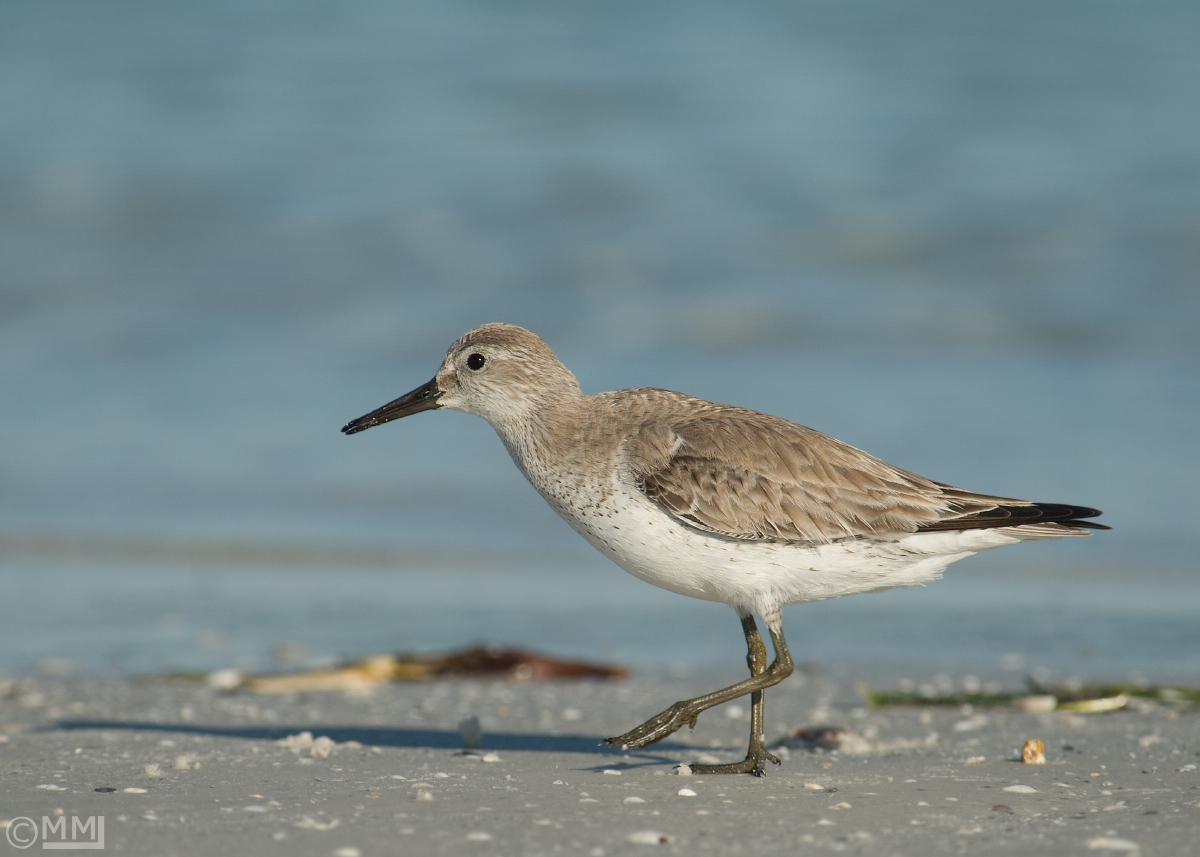
Red Knot
Calidris canutus
Red Knots have been a species of special interest for me since I first saw one while living in Florida. I would see banded Red Knots on the beaches of the Gulf of Mexico and because of the bands I began to do research about the species and soon found myself reporting all the banded Red Knots I saw and photographed there hoping that my small contribution of information to researchers might help these beautiful shorebirds.
Red Knots are a long distance migratory species. They winter in Chile and Argentina then fly 9,000 miles to the Canadian Arctic Circle to breed. On the way north Red Knots feed upon the eggs of the Horseshoe Crabs, fattening up for the long journey and to acquire fat reserves in case food is not plentiful on the breeding grounds. They need those fat reserves to raise their young and so they can begin to make the long journey back to South America.
Horseshoe crabs have been harvested for their blood which can make a medical dye, for their shells which are used for fertilizer and they are also used for bait in eel pots. The medical dyes can be synthetically produced as can the fertilizer.
The BP Deepwater Horizon oil spill has increased my concern for the Red Knots, their future and possible extinction. The oil will smother microscopic life forms, the worms and other small inverts that that crabs feed on will decline in huge numbers, the horseshoe crabs will starve if they don’t die first from being encased in oil. The horseshoe crabs won’t be producing the eggs that the Red Knot depends on to make their 9,000 mile journey to breed.
This is just one of many bird species that I feel will be decimated by the effects of the BP Deepwater Horizon catastrophe. The BP Deepwater Horizon oil spill is not just a Gulf of Mexico disaster, this will eventually become global.
My post is a tribute to the Red Knots, a species that was struggling to exist prior to the Deepwater Horizon oil spill and that will certainly be impacted now.
D200, f6.3, 1/1250, ISO 200, 80-400mm VR at 400mm, natural light, 73% of original image
As always, I sincerely appreciate your comments & critiques.

Comments
5 commentsYou choose a very appropriate title for the Weekly Theme, I quite sympathize with your motives and I do agree that this disaster will have a global impact.
We have really to learn from this lesson!
I tought a few days about the image to send and I decided to post a message of hope...
Thanks for sharing this opportunity.
Mauro